Property tax bills often contain more than one figure. Alongside the main tax liability, homeowners may notice additional charges linked to civic services provided by the local municipal authority. Understanding these components makes it easier to review the bill and plan recurring property-related expenses.
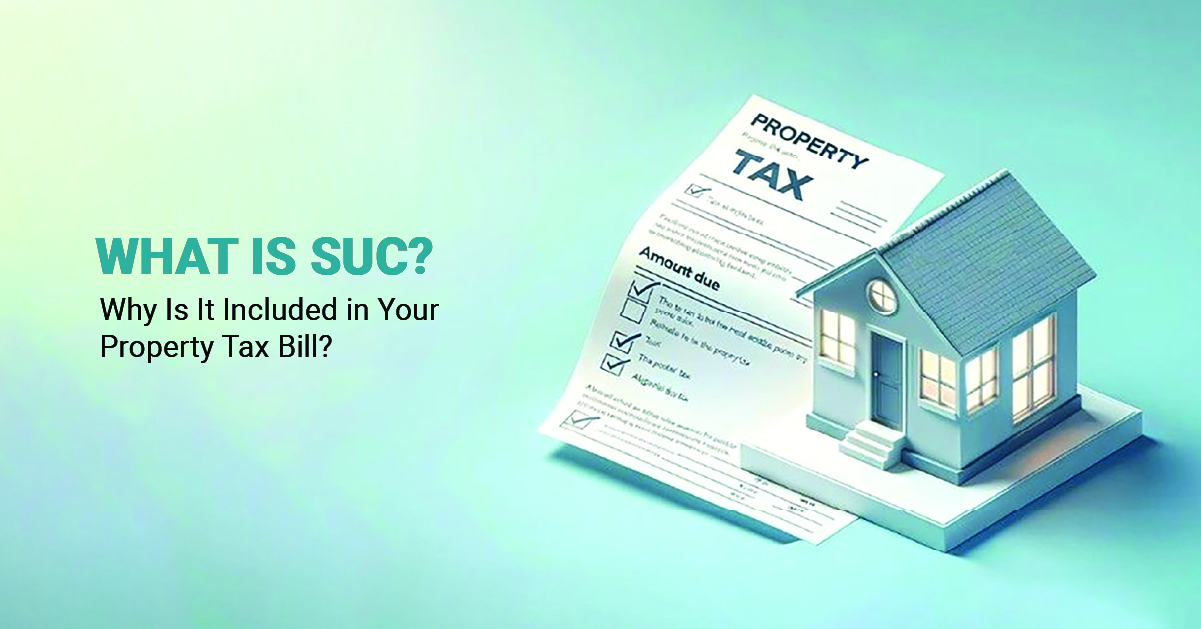
One such component in several municipal jurisdictions is SUC. If you are wondering what SUC in property tax is, it generally refers to a user charge connected with municipal solid waste services. However, the terminology, amount, and billing method can differ between urban local bodies.
Let’s look at its purpose, which can help homeowners read their property tax bills with greater clarity.
Table of Contents
- What Does SUC Mean in Property Tax?
- Why is SUC Included in the Property Tax Bill?
- What Services Does Your SUC Cover?
- Does the Size or Type of Property Affect SUC?
- What Should You Check When SUC Appears on Your Bill?
- Review Your Property Tax Bill With Greater Clarity
What Does SUC Mean in Property Tax?
The full form of SUC is commonly Solid Waste User Charge. Municipal authorities may collect this amount from households, commercial establishments, institutions, and other properties for services connected with managing municipal solid waste.
The exact terminology can vary between locations. Some municipal bodies refer to the component as a solid waste management user fee, while others may use terms such as Solid Waste Management (SWM) user charge or cess.
Tamil Nadu’s municipal administration, for example, confirms that urban local bodies provide for user fees under their solid waste management framework. Some municipal citizen charters also state that Solid Waste User Charges are collected along with property tax.
Why is SUC Included in the Property Tax Bill?
Municipal authorities are responsible for managing large quantities of household and commercial waste every day. This involves much more than simply collecting rubbish from residential areas.
Solid waste management can include collection, segregation, transportation, processing, treatment, recycling support, and final disposal. Maintaining vehicles, collection systems, sanitation workers, processing facilities, and related infrastructure also creates recurring operational costs.
Municipal user charges provide a mechanism for recovering part of these expenses from waste generators. Greater Chennai Corporation’s solid waste management bye-laws, for instance, provide for user charges to support the operation and maintenance costs involved in the solid waste management programme.
Including the charge within or alongside the property tax demand can also simplify municipal billing. Instead of homeowners having to manage several separate civic payments, the municipal authority can collect relevant dues through an established property taxation system.
This does not necessarily mean SUC and property tax are the same charge. Property tax is generally imposed on property ownership or occupation according to the applicable municipal taxation framework. SUC is typically connected to a specific civic service.
What Services Does Your SUC Cover?
The Solid Waste User Charge (SUC) supports a range of municipal services that help keep neighbourhoods clean, hygienic, and well maintained. These typically include:
- Household Waste Collection: Collection of domestic waste through door-to-door services or designated community collection points.
- Cleaning of Public Spaces: Sweeping and upkeep of public roads, markets, squares, and other commonly used areas.
- Waste Transportation: Safe movement of collected waste from neighbourhoods to authorised processing, treatment, or disposal facilities.
- Waste Processing and Disposal: Operations related to waste segregation, recycling, composting, treatment facilities, and scientific landfill management.
- Drain and Sewer Maintenance: Routine cleaning of public drains and sewer lines to support proper water flow and reduce blockages, particularly during the monsoon season.
Together, these services show how SUC contributes to the day-to-day upkeep of local communities and essential waste management systems. Understanding the services covered can also make it easier to learn how to calculate SUC and assess the applicable charge for your property.
Does the Size or Type of Property Affect SUC?
It can, depending on the municipal rules applicable in the location.
A small residential unit and a large commercial establishment may generate very different volumes of waste. Municipal schedules can therefore classify properties into separate categories and prescribe different charges.
Property buyers should consider such recurring civic costs when estimating the overall expense of homeownership. Someone comparing apartments with 5 BHK villas in Bangalore, for instance, should review applicable property taxes, municipal user charges, and other recurring obligations for the specific property.
The same principle applies in every city. Two homes with similar purchase prices may carry different annual expenses because their size, location, usage, municipal classification, and community facilities differ.
What Should You Check When SUC Appears on Your Bill?
If an SUC or SWM charge appears on your property tax bill, review the following details before making the payment:
- Property and Assessment Details: Check the assessment number, property address, ownership information, usage classification, and billing period.
- Applicable SUC Rate: Verify the current user charge through the official municipal portal or the latest notification issued by the local authority.
- Break-up of the Total Demand: Review the individual tax and service-charge components instead of relying only on the final payable amount.
- Payment and Assessment Records: Keep previous receipts and compare them with the latest bill. If any property category, assessment detail, or charge appears incorrect, use the municipality’s grievance or reassessment process.
Review Your Property Tax Bill With Greater Clarity
Buying a home involves more than budgeting for its purchase price. Property tax, maintenance charges, municipal service fees, insurance, utilities, and periodic upkeep can collectively influence the long-term cost of ownership.
SUC is one such recurring civic component that homeowners may encounter on their municipal bills. Its purpose is generally connected with supporting solid waste collection and management, although the applicable structure varies across local authorities.
Before paying a property tax bill, review its individual components and confirm the applicable municipal rates. For prospective buyers, understanding these recurring obligations before purchasing a property can provide a clearer picture of the home’s overall ownership cost.