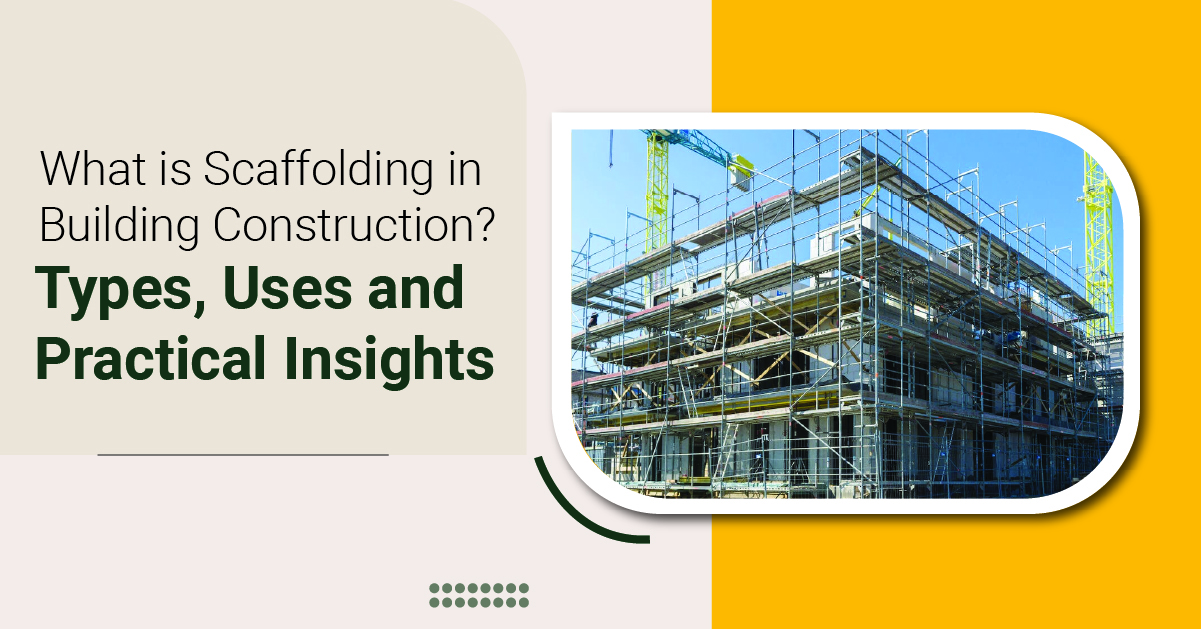
When a building rises floor by floor, there is a critical structure making that progress possible, scaffolding. Scaffolding in building construction refers to a temporary framework that supports workers, tools, and materials during construction, repair, or maintenance work. It is one of the most fundamental elements of any building project, yet often overlooked by homebuyers.
Whether you are constructing a new home or renovating an existing one, understanding scaffolding helps you evaluate builder quality and worksite safety.
This blog covers the types of scaffolding, their specific uses, and what practical factors matter most on-site.
What is Scaffolding and Why Does It Matter?
Scaffolding is a temporary elevated platform system. It gives workers safe access to heights that would otherwise be unreachable. Without it, tasks such as plastering, painting, installing windows, or laying brickwork at height become unsafe and impractical.
It is a modular, load-bearing temporary structure, typically made of metal tubes, wooden planks, or prefabricated frames, erected alongside or around a building to support workers and materials during construction or maintenance.
According to the Occupational Safety and Health Administration (OSHA), scaffold-related accidents account for a significant portion of construction fatalities globally. Proper scaffolding directly reduces these risks.
Key reasons scaffolding matters:
- Ensures worker safety at height
- Provides stable platforms for heavy materials
- Speeds up construction timelines
- Supports quality control across all building faces
Common Types of Scaffolding Used in Construction
Here are different types of scaffolding preferred by builders in Chennai, Bangalore, Hyderabad, and across other cities:
-
Tube and Coupler Scaffolding
Made from steel or aluminium tubes joined by couplers, this type is highly adaptable. It suits irregular building shapes and heavy loads. It is widely used across residential and commercial construction projects in India.
-
Frame Scaffolding (System Scaffolding)
Pre-fabricated frames are assembled on site. It is faster to erect and dismantle, making it ideal for straightforward residential builds.
-
Suspended Scaffolding
Platforms are hung from the roof using ropes or cables. Used primarily for high-rise buildings and facade maintenance. This type allows workers to access vertical surfaces without ground support.
-
Cantilever Scaffolding
Supported from within the building structure itself, this type is used when the ground cannot bear the load or is obstructed. It requires careful structural calculation.
-
Kwikstage Scaffolding
A modular system popular in modern construction. Components interlock without loose fittings, making assembly safer and quicker.
How Scaffolding is Used During Different Construction Phases
Scaffolding serves distinct purposes across the building lifecycle:
| Construction Phase | Scaffolding Use |
|---|---|
| Foundation and lower floors | Material hoisting, formwork support |
| Mid-rise structural work | Worker access, bricklaying, plastering |
| External finishing | Painting, cladding, and window installation |
| Maintenance and repair | Facade work, waterproofing, renovation |
Key Safety and Quality Considerations
Quality scaffolding directly reflects builder standards. When evaluating a construction project, these factors are worth noting:
- Structural Integrity
- All joints and couplers must be tightened correctly
- The load capacity must be verified before use
- Base plates must rest on firm, level ground
- Compliance Standards: In India, scaffolding on construction sites is governed by the Building and Other Construction Workers Act, 1996, and associated safety codes. Reputable builders comply with these norms. This ensures that every stage of construction adheres to legally mandated safety practices, significantly reducing on-site risks.
- Worker Training: Even the best scaffolding fails when workers are untrained. Site safety inductions, harness use, and load management are non-negotiables. Proper training also helps prevent accidents and ensures smoother day-to-day execution on-site.
- Material Quality: Galvanised steel tubes resist rust and last longer. Avoid worksites using visibly corroded or damaged scaffolding components. High-quality materials also improve stability, especially during long construction cycles and changing weather conditions.
Why Scaffolding Reflects a Builder’s True Standards
Scaffolding in building construction is more than a temporary support system. It plays a key role in worker safety, construction quality, and timely project delivery. A well-structured scaffolding setup allows workers to access different heights safely and complete tasks with accuracy. Homebuyers who understand its importance can ask better questions and identify builders who follow proper safety practices instead of cutting corners.
Good builders always ensure that scaffolding is installed correctly, inspected regularly, and aligned with safety standards. This reflects their overall commitment to quality construction, from the foundation stage to final finishing.
Choosing the right builder means choosing someone who values safety, precision, and consistency at every step of the construction process. This ensures better long-term structural durability outcomes.