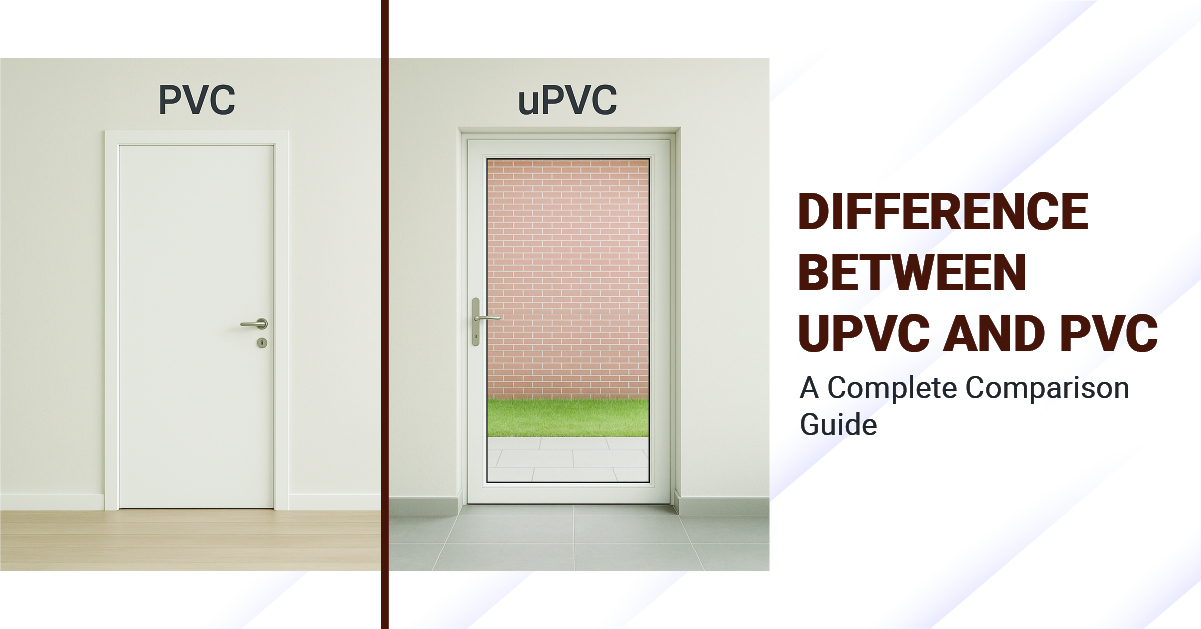
PVC and uPVC are common terms in construction and home improvement, yet they are often used interchangeably. For homebuyers and property owners, understanding what these materials refer to can make technical specifications easier to interpret.
If you have come across terms such as the full form of uPVC or searched for what uPVC is, it helps to first understand how these materials are classified and why their characteristics matter in construction.
Although PVC and uPVC come from the same material family, they are selected for different requirements across residential and commercial projects. Knowing how they compare can help you understand their suitability more clearly.
Let us look at PVC and uPVC in detail before comparing their key differences and applications.
Table of Contents
- Understanding PVC and uPVC
- What is the Difference Between PVC and uPVC?
- Applications of PVC and uPVC
- Make a More Informed Choice for Your Property
Understanding PVC and uPVC
Before comparing the two materials, it is useful to understand what each one is and how it is generally characterised.
- What is PVC?
PVC stands for Polyvinyl Chloride. It is a synthetic plastic polymer widely used across construction, plumbing, electrical and household applications.
PVC can be manufactured in rigid or flexible forms depending on the intended use. Plasticisers may be added during production to make the material softer and more adaptable for products that require flexibility.
- What is uPVC?
uPVC stands for Unplasticised Polyvinyl Chloride. It is a rigid form of PVC that is manufactured without the plasticisers commonly used to increase flexibility. This gives uPVC a firmer structure and better shape retention. It is commonly selected for construction components that require rigidity, stability, and consistent performance over time.
What is the Difference Between PVC and uPVC?
Although both materials come from the same polymer family, their composition affects their flexibility, strength, and suitability for different applications. The table below highlights the main differences.
| Factor | PVC | uPVC |
| Plasticisers | May contain plasticisers to increase flexibility | Does not contain the plasticisers commonly used in flexible PVC |
| Flexibility | Can be flexible or semi-rigid, depending on its formulation | Generally rigid and less flexible |
| Strength | Suitable for applications that require flexibility and adaptability | Better suited to applications requiring firmness and structural stability |
| Shape Retention | May bend or adapt more easily in flexible forms | Retains its shape more effectively under normal use |
| Maintenance | Maintenance depends on the specific product and application | Generally easy to clean and requires limited routine maintenance |
| Moisture Resistance | Performs well in suitable plumbing and protective applications | Commonly used where resistance to moisture is important |
| Typical Construction Use | Often used in cables, flooring, tubing and selected pipes | Frequently used in window frames, door frames and drainage systems |
Applications of PVC and uPVC
PVC and uPVC are used across different parts of residential and commercial construction. Their suitability depends largely on the level of flexibility, rigidity and durability required for a specific application.
As apartment construction expands across cities such as Pune, Chennai, and Bengaluru, buyers are paying closer attention to the materials used within residential projects. For instance, those comparing flats for sale in Pune may come across PVC and uPVC in specifications for windows, plumbing components, and other building features.
Common Applications of PVC
PVC is commonly used in areas where flexibility, insulation, or adaptability is useful.
- Electrical Cable Insulation: PVC is widely used as a protective covering around electrical wires and cables due to its insulating properties.
- Plumbing Pipes and Fittings: Certain types of PVC are used in water supply, drainage and plumbing systems, depending on installation requirements.
- Vinyl Flooring: PVC is used in flooring products because it can be manufactured in different finishes, patterns, and levels of flexibility.
- Flexible Tubing: Plasticised PVC is suitable for tubing that needs to bend or adjust around different layouts.
- Wall and Interior Products: PVC may also be used in wall coverings, panels, trims and other interior components.
Common Applications of uPVC
uPVC is generally chosen for construction components that require greater rigidity and consistent shape retention.
- Window Frames: uPVC is widely used for window frames because it provides a firm structure and requires relatively simple upkeep.
- Door Frames: Its rigidity makes it suitable for door frames and selected door systems used in residential buildings.
- Drainage Systems: uPVC pipes are commonly used for drainage and wastewater applications where rigid piping is required.
- Building Profiles: The material can be formed into profiles used around windows, doors, and other structural openings.
- Residential Fixtures: uPVC may also be used in selected building fixtures where moisture resistance and low routine maintenance are important.
Make a More Informed Choice for Your Property
The right material depends on where and how it will be used within a building. PVC can suit applications that need greater flexibility, while uPVC is often preferred where rigidity and shape retention matter more.
For homebuyers, this distinction can be useful when reviewing specifications for windows, doors, plumbing systems and interior components. Looking beyond surface finishes and understanding the materials used across different parts of a property can provide a clearer view of its overall construction.
When comparing homes, consider these details alongside layout, ventilation, location, amenities, and maintenance requirements. A more informed assessment can make it easier to choose a property that suits both present needs and long-term expectations.