A comfortable indoor space requires more than simply setting the thermostat to your preferred temperature. Heating, cooling, ventilation, and air circulation work together to create balanced indoor conditions throughout the year. The right system can also affect energy consumption, comfort levels, and ongoing maintenance.
Let’s explore the meaning of HVAC, understand how these systems work, compare the common options, and learn what to consider when choosing the right system for your building.
Table of Contents
- What is an HVAC System and How does it Works?
- What Does HVAC Installation Involve?
- What are the Main Components of an HVAC System?
- How Much Does an HVAC System Cost?
- 6 Types of HVAC Systems and Where They Work Best
- How Can You Choose the Right HVAC System?
- Making an Informed HVAC Choice for Your Property
- FAQs
What is an HVAC System and How does it Works?
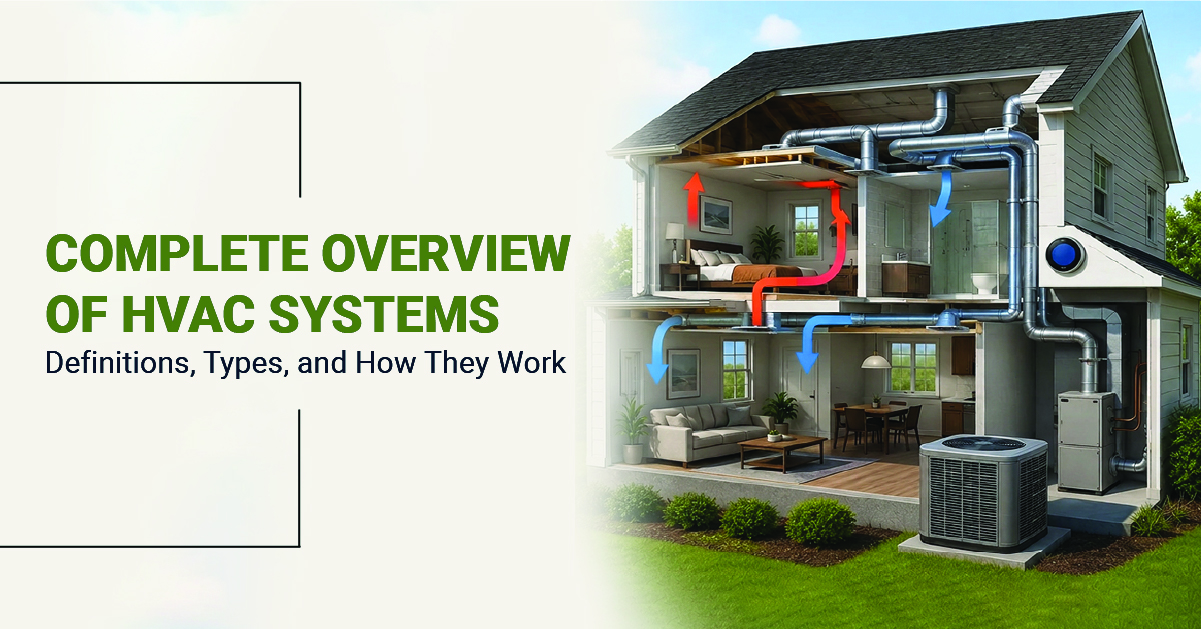
An HVAC system controls indoor temperature, airflow, humidity, and air quality by combining heating, ventilation, and air conditioning functions. It can keep rooms warm during colder periods, cool during hotter weather, and properly ventilated throughout the year.
If you are wondering “what is the full form of HVAC”, it stands for Heating, Ventilation, and Air Conditioning. Heating raises indoor temperatures when required, ventilation introduces fresh air and removes stale air, while air conditioning cools and dehumidifies indoor spaces.
An HVAC system uses different components to move and condition air throughout a building. The exact process depends on the system type, but the basic operation typically involves:
- Heating: The heating component generates or transfers heat to raise the indoor temperature when needed.
- Cooling: The air conditioning component removes heat from indoor air and can also reduce humidity.
- Air Circulation: Fans move conditioned air through ducts or directly into different rooms.
- Air Filtration: Filters capture dust and other airborne particles from circulating air.
- Temperature Control: A thermostat or control system monitors indoor conditions and adjusts the HVAC system to maintain the selected temperature.
- Ventilation: The system introduces fresh outdoor air and removes stale indoor air to support indoor air quality.
An efficient HVAC system can provide consistent comfort while using less energy for the required heating or cooling output. Its efficiency can also depend on insulation, equipment size, maintenance, thermostat settings, and duct condition.
What Does HVAC Installation Involve?
HVAC installation involves placing and connecting the required heating, cooling, ventilation, and control equipment so that the system can operate efficiently. The installation process can vary significantly between system types.
A ducted system may require space for ductwork, vents, return-air pathways, and indoor equipment. A ductless system generally requires less structural modification but still needs appropriate locations for indoor units, an outdoor unit, refrigerant lines, electrical connections, and drainage.
The building layout should also be assessed before installation. Equipment needs sufficient clearance for safe operation and future maintenance. Electrical capacity, ventilation requirements, drainage, insulation, and access to outdoor areas may also influence the installation process.
Professional installation is important because incorrect connections, poor ductwork, unsuitable equipment placement, or inadequate sizing can affect system performance and energy consumption.
What are the Main Components of an HVAC System?
The components used in an HVAC system depend on its design and functions. However, several parts are commonly found across different systems.
- Thermostat: Monitors and controls the indoor temperature based on the selected settings.
- Compressor: Circulates refrigerant through the cooling system and helps transfer heat.
- Condenser: Releases heat from the refrigerant, usually through the outdoor unit.
- Evaporator Coil: Absorbs heat from indoor air during the cooling process.
- Blower or Fan: Moves conditioned air through the system and into the required spaces.
- Air Filters: Capture dust and other airborne particles from circulating air.
- Ductwork: Distributes conditioned air through different rooms in ducted systems.
- Refrigerant Lines: Carry refrigerant between the indoor and outdoor components of applicable systems.
- Heat Exchanger: Transfers heat between different air or fluid streams without directly mixing them.
Understanding these components can make it easier to identify maintenance requirements and recognise potential performance issues.
How Much Does an HVAC System Cost?
The cost of an HVAC system depends on several factors rather than one fixed price. The type and capacity of the system, property size, installation complexity, energy efficiency, and required components can all influence the overall expense.
Ducted systems may involve additional costs for designing and installing ductwork, while ductless systems can have different equipment and installation requirements. Larger properties or buildings with multiple zones may require more equipment and more complex controls.
Ongoing expenses should also be considered. These can include electricity consumption, filter replacement, professional servicing, repairs, and eventual component replacement. Comparing both the initial installation cost and long-term operating requirements can provide a clearer understanding of the overall investment.
6 Types of HVAC Systems and Where They Work Best
The main types of HVAC systems differ in design, installation requirements, and suitability for different buildings.
| HVAC System Type | How it Works | Best For | Key Benefits |
| Split System | Separates the main equipment between indoor and outdoor units. Conditioned air is generally distributed through ducts. | Homes | Familiar design, heating and cooling capability, suitable for central ductwork |
| Hybrid Split System | Combines an electric heat pump with a furnace and changes the heating source according to conditions. | Homes in seasonal climates | Flexible heating, two heating sources, adapts to temperature changes |
| Ductless Mini-Split System | Connects an outdoor compressor with indoor units through refrigerant lines to condition individual zones. | Flats, extensions, and individual rooms | No central ductwork, independent zone control, reduced duct-related losses |
| Packaged System | Houses major heating and cooling components inside one outdoor cabinet before distributing conditioned air through ducts. | Small commercial buildings | Compact design, saves indoor space, convenient equipment access |
| Geothermal System | Uses underground ground loops to transfer heat between the building and the ground. | Energy-conscious properties | Efficient heat transfer, heating and cooling from one system |
| Variable Refrigerant Flow (VRF) / Variable Refrigerant Volume (VRV) System | Adjusts refrigerant flow according to the heating or cooling demand of different zones. | Large multi-zone buildings | Precise temperature control, independent zones, variable output |
Each option has different installation and space requirements. A split system may suit a conventional home, while a ductless option can work well where ducts are unavailable. For example, apartments in HSR Layout, Kanakapura Road, or any other place in Bangalore, Chennai, or other cities with limited space for central ductwork may benefit from a suitable ductless arrangement.
How Can You Choose the Right HVAC System?
Choosing an HVAC system requires more than comparing equipment specifications. The most suitable option depends on the building, local conditions, available infrastructure, and expected usage.
- Assess the Size and Layout of Your Building
The size and layout of the property influence the heating and cooling capacity required. A system that is too small may struggle to maintain the desired temperature, while an oversized system can cycle inefficiently and may not provide consistent comfort.Consider the number of rooms, ceiling height, windows, insulation, occupancy, and overall floor area when assessing the appropriate capacity.
- Consider the Local Climate and Comfort Needs
Local weather conditions affect how often heating or cooling is required. Properties in warmer climates may have greater cooling requirements, while buildings in colder regions may need more heating capacity.Also consider whether different rooms require separate temperature settings. Multi-zone systems may be useful where occupants have different comfort preferences across the building.
- Compare Energy Efficiency and Running Costs
Energy efficiency can affect the ongoing cost of operating an HVAC system. Look at the system’s efficiency ratings and expected energy consumption rather than focusing only on the initial purchase price.A system with suitable efficiency can reduce unnecessary energy use when correctly sized, installed, and maintained.
- Check Available Installation Space and Infrastructure
Available space can influence which HVAC systems are practical for a property. Ducted systems require suitable routes for ductwork, while ductless systems need appropriate locations for indoor and outdoor units.Existing electrical connections, ventilation arrangements, drainage, and building structure should also be assessed before making a decision.
- Evaluate Maintenance Needs and System Lifespan
Regular maintenance helps an HVAC system operate as intended. Before choosing a system, consider how frequently filters, coils, ducts, refrigerant systems, and other components may require inspection or servicing.It is also useful to consider the availability of qualified technicians and replacement components. A system that is suitable for the property and supported by accessible maintenance services can be easier to manage over its operating life.
Making an Informed HVAC Choice for Your Property
Knowing how an HVAC system works can help you manage indoor comfort and air quality effectively. HVAC systems regulate temperature, control airflow, and support ventilation through heating, cooling, and filtration.
Their performance depends on factors such as building size, layout, climate, insulation, and occupancy. These factors influence how conditioned air moves through different spaces and maintains consistent indoor temperatures.
It is also important to know the system’s capacity, energy consumption, maintenance needs, and key components. Regular professional assessments can help identify performance issues and keep the system operating as intended.
Learn how your HVAC system functions to manage comfort, airflow, energy use, and maintenance more effectively.
FAQs
What are the four types of HVAC systems?
The four common residential HVAC system types are split systems, ductless mini-split systems, packaged systems, and geothermal systems. Each suits different building layouts and requirements.
What exactly is an HVAC system?
HVAC stands for Heating, Ventilation, and Air Conditioning. An HVAC system regulates indoor temperature, airflow, humidity, and ventilation to maintain comfortable indoor conditions.
What is VRF and VRV in HVAC?
VRF means Variable Refrigerant Flow, while VRV means Variable Refrigerant Volume. They describe the same underlying technology, with VRV being Daikin’s trademarked term.
What is a 2-stage HVAC system?
A two-stage HVAC system uses two operating levels, typically a lower stage for regular demand and a higher stage for peak demand, improving comfort and dehumidification.
What is the best type of HVAC?
There is no single best HVAC type for every property. The suitable option depends on building size, climate, layout, energy needs, installation space, and comfort requirements.