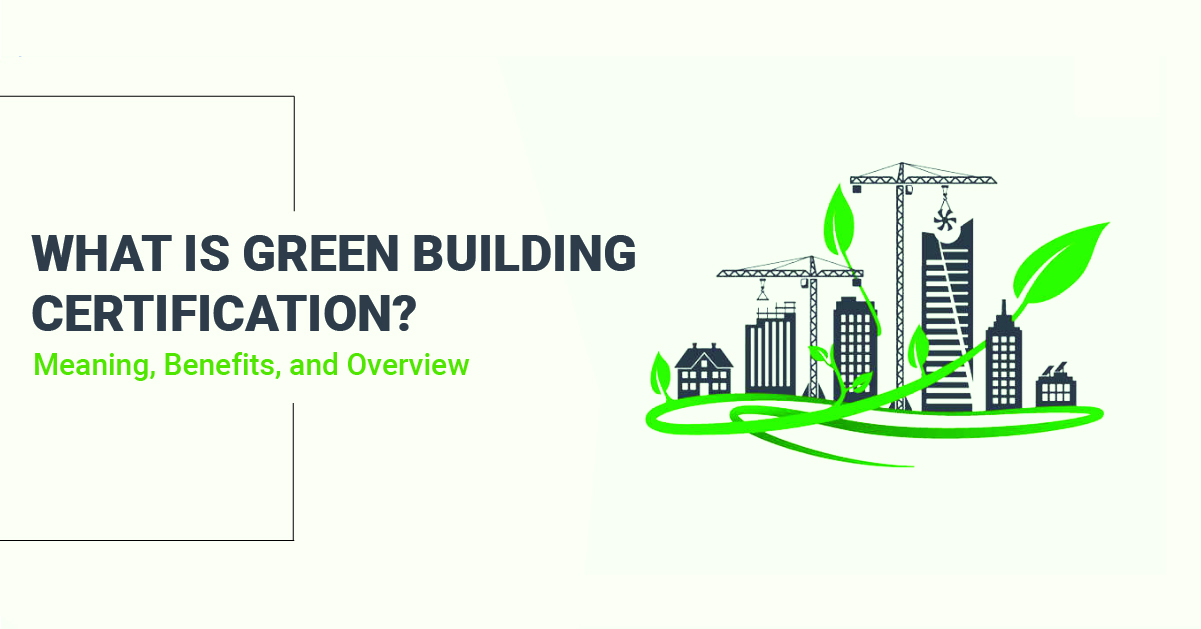
As cities continue to grow, the need for buildings that use fewer natural resources and create a healthier environment also increases. Recently, homebuyers and builders have become more interested in energy-efficient designs, water conservation, and eco-friendly construction practices.
This growing focus on sustainability has made green buildings more important than ever. These efforts are made through green building certifications. But what exactly does it mean, and why is it becoming increasingly important?
In this blog, we will explain what green building certification is, its benefits, and how it works.
Table of Contents
- What is Green Building Certification?
- 9 Benefits of Green Building Certification
- Popular Green Building Certification Systems in India
- How to Identify a Green Certified Building?
- Choose Sustainable Home Designs for Future
What is Green Building Certification?
Green building certification is a process that formally evaluates whether a building meets specific standards of environmental sustainability. This is an official recognition that is given to buildings that meet the requirements of sustainability. This includes energy efficiency and water conservation, waste management, indoor air quality, and environmentally responsible construction practices.
Recently, alongside location, design, and amenities, sustainability has become an important factor for homebuyers who are exploring modern residential projects. In fact, many buyers searching for the best builders in Pune, Hyderabad, Coimbatore, and Delhi now consider sustainable features before making property decisions.
One can go through the green building certification requirements to easily understand what green certification is. Its sustainability parameter includes:
- Energy efficiency
- Indoor air quality
- Natural lighting and ventilation
- Natural system to control and store rainwater
- Efficient waste segregation and recycling process
- Use of renewable energy sources
- Site planning and biodiversity protection
- Use of sustainable construction materials
- Water conservation practices
- Waste management systems
The better a building performs across these areas, the higher its certification rating.
9 Benefits of Green Building Certification
Green certification has been gaining popularity since its introduction because of the benefits it provides to developers, homeowners, and the environment. Some of its key benefits include:
- Low Energy Consumption
As stated by the Bureau of Energy Efficiency (BEE), energy-efficient buildings have the ability to reduce operational energy demands. This is because green buildings use lighting, insulation, and appliances that are energy-efficient.
As a result, this significantly reduces the requirement for electricity over time. This also includes using energy sources like solar panels.
- Reduced Water Usage Certified buildings incorporate rainwater harvesting, low-flow fixtures, and wastewater recycling. These steps helps with lowering water consumption and relieve pressure on water supplies by the municipal corporation. This also helps with cost-cutting for residents and facility managers.
- Lower Operating Cost
Certified buildings often incorporate energy-saving lighting and other renewable energy sources. This significantly cuts electricity bills. As a result, Green building certification helps reduce the day-to-day expenses of running a building.
The sustainable use of resources lowers the water and electricity bills, and the use of durable materials lowers the maintenance costs and lifecycle expenditures.
- Environmental Benefits As Green Building Certifications focus on sustainability, it positively impacts the environment. For instance, rainwater harvesting processes along with the installation of solar panel reduces water and energy consumption and greenhouse gas emissions. This helps deal with climate change and helps preserve natural resources.
- Improved Indoor Air Quality
Proper ventilation, low-emissions, and improved airflow are essential parts of certified buildings. As a result, this makes the indoor spaces healthier and more comfortable for the hoemowners.
This also impacts the natural lighting, reducing the dependency on electricity and thermal energy and sunlight during winters in winter-prone areas. Proper ventilation also prevents the growth of damp and mold on buildings.
- Higher Property Value Sustainability has become a prominent feature when it comes to buyers and homeowners. A sustainable environment with proper airflow and sunlight, uninterrupted water supply, and use of solar panels has become a sign of luxury and better living standards. This, as a result, attracts stronger buyers’ interest and better long-term value.
- Regulatory Incentive Advantages
One of the most important factors of Green Building Certifications is that they may qualify for government incentives, tax benefits, and subsidies.
In India, programmes like GRIHA and IGBC certifications may make projects eligible for state-level benefits or compliance incentives.
- Tenant Retention
The increase in severe impacts of climate change has significantly increased the demand for certified green buildings.
Companies, homebuyers, and tenants are increasingly embracing sustainable practices and choosing buildings that support environmental conservation and healthier living.
Green-certified office buildings in India typically record occupancy levels of 80 -90%, compared to 65-85% for non-certified buildings, highlighting the growing preference for sustainable workspaces.
Popular Green Building Certification Systems in India
Several recognised certification systems that are used for green building certification in india are:
| Name of Green Building Certification System | Key Features | Best For |
| Indian Green Building Council (IGBC) | ● Built around India’s unique climate, construction methods, and user behaviour.
● Offers certifications for green homes, townships, interior, healthcare, and metro rail systems. ● It follows a checklist-based evaluation. ● Certification is evaluated after design and post-construction verification. ● Fast approvals and incentives. |
Institutions and government agencies seeking a practical, nationally recognised green building. |
| LEED (Leadership in Energy and Environmental Design) | ● Uses tools like energy modelling and building commissioning to reduce energy and carbon footprints.
● Includes innovation and long-term. ● Simplifies documentation, submission, and team collaboration through a centralised platform. |
A preferred choice for corporate offices, MNCs, and
estate developers, aiming to meet global sustainability requirements. |
| GRIHA (Green Rating for Integrated Habitat Assessment) | ● This indigenous rating system has strong relevance to regional, cultural, and economic contexts.
● It focuses on climate-responsive designs. ● Evaluates how efficiently a building uses resources, its embodied energy, and its life cycle costs. |
A good choice for government buildings, educational institutions, and residential projects looking for practical, affordable, and climate-sensitive sustainability. |
| WELL Certification | ● Prioritizes occupant health, comfort, and and well-being
● Evaluates air quality, water quality, lighting, thermal comfort, acoustics, and mental wellness. ● Encourages healthy building design and operations.
|
It is best for corporate offices, hospitals, schools, residential developments, and organisations aiming to create healthier indoor environments and improve occupant well-being |
How to Identify a Green Certified Building?
If you are considering buying a property, try checking these points to identify a Green Certified building:
- An official certification from IGBC, GRIHA, or LEED.
- Rainwater harvesting systems
- Installation of Solar panels
- Energy-efficient lighting process
- Proper air ventilation
- Waste water recycling
- Waste management practices
- Sustainable construction materials
These features often indicate that sustainability has been incorporated in the project’s design.
Choose Sustainable Home Designs for Future
Sustainability is no longer an industry trend; rather, it has become an essential part of modern living. Understanding what Green Building Certification is helps buyers make informed decisions.
At the same time, it encourages developers to consider sustainable construction practices to help both the environment and the homeowners. As sustainable homes gain importance, Casagrand is opting for thoughtfully planned projects. These are often a combination of
comfortable and future-living spaces with environmentally-led designs. When choosing your next living space, it is recommended to look beyond location and amenities and choose sustainability to make a more informed decision.