Walls in kitchens, bathrooms, and utility areas regularly face moisture, stains, and everyday wear. Paint alone may not always provide adequate protection in such spaces. Builders therefore use durable surface treatments that strengthen vulnerable sections while improving their appearance.
Dado is one such treatment commonly seen along the lower portion of an interior wall. It can be created using tiles, stone, wood, or other suitable materials, depending on the room and design requirements.
Understanding dado in construction can help homebuyers assess finishing quality and long-term maintenance needs. Let’s look at what dado means, where it is used, and the practical benefits it offers.
Table of Contents
- What is Dado in Construction?
- Which Materials Are Used for Dado Work?
- Common Uses and Benefits of Dado in Construction
- Make Wall Finishes Part of Your Homebuying Checklist
What is Dado in Construction?
A dado is a protective and decorative finish applied to the lower section of an interior wall. It usually begins at floor level and extends upwards to a specified height. The height varies according to the room, its purpose, and the chosen design.
Ceramic tiles, vitrified tiles, natural stone, wood panels, laminates, and washable wall materials may be used to create it. In bathrooms, the treatment may extend close to the ceiling to protect walls from water and humidity.
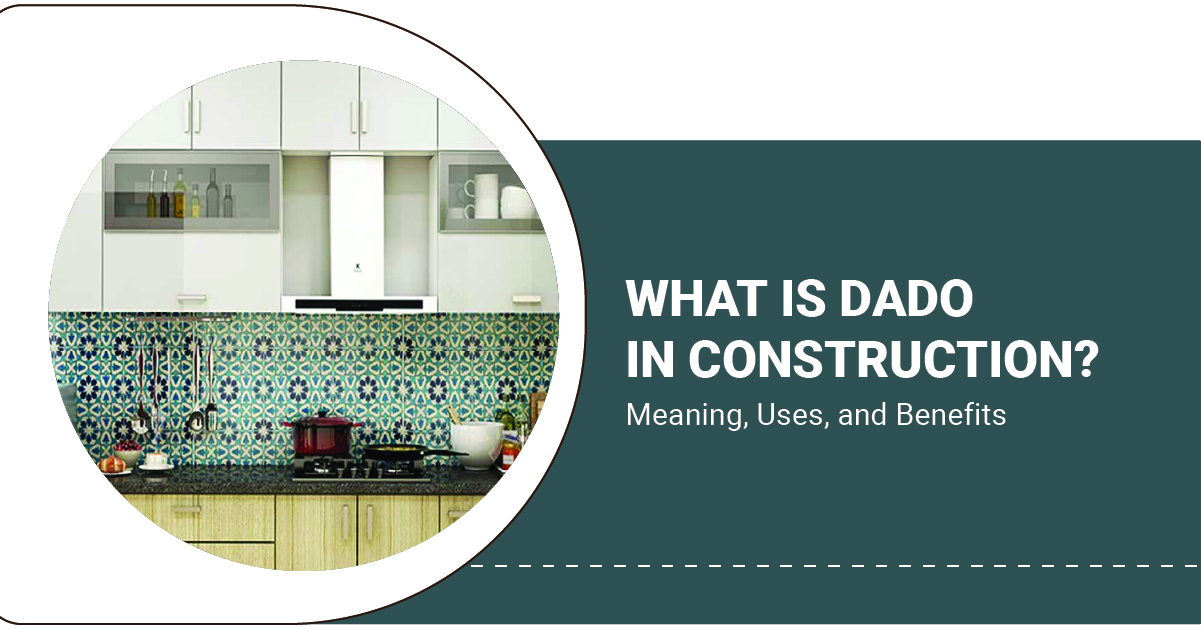
Kitchen dado is generally installed above the countertop and around the cooking and washing areas. In corridors, dining areas, and staircases, a lower-height dado can guard walls against scuffs, stains, and accidental impacts.
This makes its quality an important consideration for homebuyers across growing residential cities. People comparing flats in Chennai and Bangalore or looking to buy a flat in Hyderabad should check the material, alignment, and finish of the dado during property visits.
Which Materials Are Used for Dado Work?
The choice of dado material depends on the room, moisture exposure, cleaning requirements, and desired interior style. While some materials suit wet areas, others are better suited to decorative spaces.
- Ceramic Tiles: Ceramic tiles are commonly used in kitchens, bathrooms and utility areas. They are affordable, easy to clean and available in numerous colours, patterns and finishes.
- Vitrified Tiles: Vitrified tiles have low porosity and offer strong resistance to moisture, stains and regular wear. These qualities make them suitable for frequently used and moisture-prone spaces.
- Natural Stone: Marble and granite can give the wall a refined appearance while providing considerable durability. However, certain natural stones may require sealing and careful maintenance.
- Wooden Panels: Wooden dado panels add warmth and texture to living rooms, dining areas, and corridors. Since prolonged moisture can damage wood, these panels are generally avoided in bathrooms and washing areas.
- PVC and Laminate Panels: PVC and laminate panels are lightweight, easy to maintain, and available in various designs. They can be used in selected interior spaces, provided the material quality and installation method suit the environment.
Understanding these options helps explain what dado is beyond its basic definition. The right material allows the dado to protect the wall while complementing the room’s overall design.
Common Uses and Benefits of Dado in Construction
Different rooms require different levels of protection. The material and height of the dado should therefore reflect how the area is used.
- Protecting Kitchen Walls Kitchen walls are exposed to oil splashes, food stains, heat and moisture. A tiled backsplash or dado creates a surface that can be wiped clean more easily than ordinary painted plaster. It is commonly fitted between the countertop and overhead cabinets.
- Reducing Moisture Damage in Bathrooms Bathrooms require wall surfaces that can withstand repeated exposure to water and steam. Tile dado helps limit moisture penetration, staining, and damage to the underlying plaster. It is often extended to a greater height around showers, washbasins, and bathtubs.
- Keeping Utility Areas Easier to Clean Utility rooms and washing areas may be exposed to detergent, water splashes, and dirt. A durable wall finish makes routine cleaning simpler and helps preserve the surface during frequent household use.
- Preventing Marks in Passages Furniture, footwear, bags, and cleaning equipment can leave marks on walls in corridors and staircases. Dado panelling or tiles protect the lower section, where such contact is most likely to occur.
- Improving Dining and Living Spaces Wooden or decorative dado panels can divide a wall visually and add character to a room. They may complement furniture, flooring, or other interior elements while protecting the wall from chairs and everyday contact.
Make Wall Finishes Part of Your Homebuying Checklist
Small construction details can significantly influence how a home looks, feels, and performs over time. During a property visit, examine the materials used in kitchens, bathrooms, and utility spaces.
Check tile alignment, grout lines, edge finishing, and signs of moisture. These observations can reveal the overall attention given to workmanship. If you plan to buy a flat in Hyderabad, compare such practical details across properties alongside the layout, location, and amenities.
A careful inspection can help you choose a home that is visually appealing and suited to everyday use.