Rapid urbanisation, expanding city borders, and increasing traffic congestion have fundamentally altered how people view residential real estate. For decades, urban living meant commuting long distances between residential suburbs, workplace hubs, schools, and commercial centres. However, as time becomes an increasingly valuable asset, modern city dwellers are demanding a lifestyle where convenience, safety, and recreation exist in a single location.
Enter the integrated township, a master-planned urban ecosystem designed to redefine modern living.
This blog explains how these developments offer a comprehensive solution to the challenges of modern metropolitan life.
Table of Contents
- What is an Integrated Township?
- Core Pillars of a Modern Township
- Key Advantages of Township Living
- The Rise of Master-planned Communities in Tech Hubs
- Why Townships Represent the Future of Urban Living?
What is an Integrated Township?
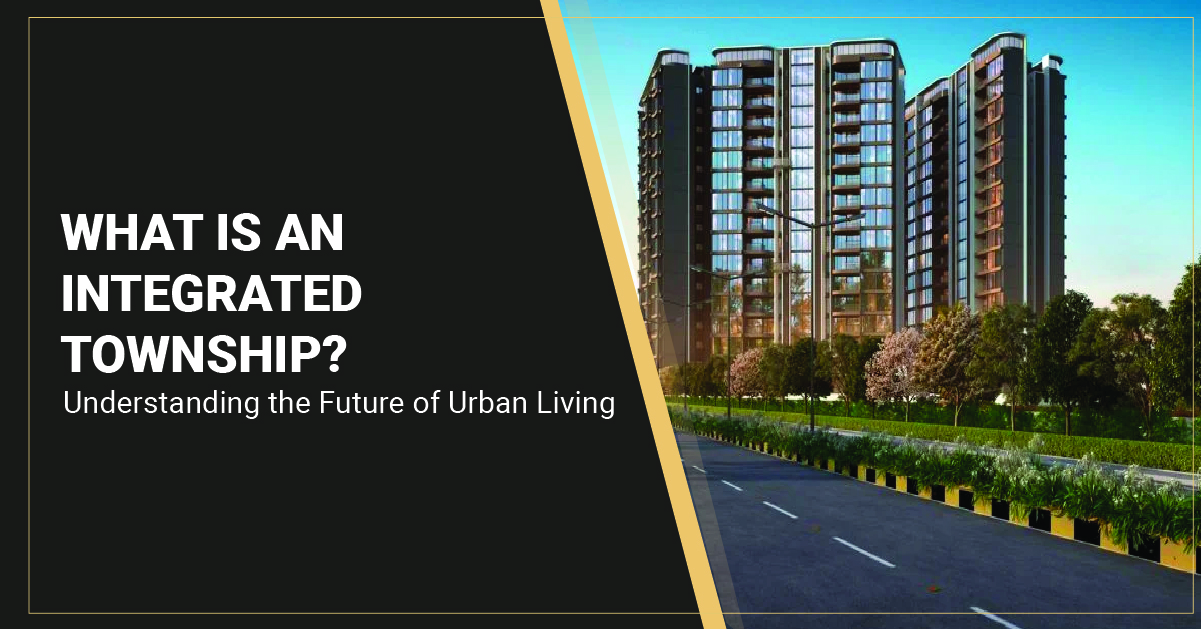
To fully grasp the meaning of an integrated township, one must look beyond standard apartment complexes or traditional gated housing societies. While a standard gated community primarily focuses on shared residential amenities such as a clubhouse, swimming pool, and basic security, an integrated development functions as a self-sustaining mini-city.
These developments bring together living, working, learning, shopping, and leisure within a single secure perimeter. Rather than relying entirely on municipal infrastructure, a township integrates dedicated internal systems for water supply, power backup, sewage treatment, waste management, and traffic regulation.
Core Pillars of a Modern Township
A successful township layout balances multi-functional zones so that residents rarely need to step outside the campus for daily necessities. The framework relies on several fundamental pillars:
-
- Diverse Housing Options
Townships cater to a broad spectrum of demographics by offering varied housing formats. Buyers can choose from high-rise apartments and executive suites to spacious townhouses and luxury villas in Bangalore, Chennai, Hyderabad, and other metropolitan hubs. This variety fosters a diverse, inclusive neighbourhood where young professionals, expanding families, and retirees coexist comfortably.
- Commercial and Workplace Integration
One of the defining aspects of township living is the “walk-to-work” culture. By incorporating grade-A office buildings, tech parks, co-working spaces, and commercial complexes within or adjacent to residential sectors, these projects drastically reduce commute times.
- Comprehensive Social Infrastructure
Access to essential social services is built directly into the master plan. Essential facilities typically include:
- Educational Institutions: K-12 international schools and early-learning daycares within walking distance.
- Healthcare Centres: Multi-specialty clinics, pharmacies, and emergency medical centres operating 24/7.
- Retail and Dining: High-street shopping plazas, supermarkets, banks, restaurants, and cafes.
- Eco-friendly Utilities and Sustainability
Integrated developments are engineered with long-term environmental sustainability in mind. Features like rainwater harvesting, on-site sewage treatment plants (STP), organic waste converters, and electric vehicle (EV) charging stations ensure that the campus reduces its carbon footprint while delivering uninterrupted utility services.
- Diverse Housing Options
Key Advantages of Township Living
Comparing traditional standalone housing to township living highlights several distinct advantages that transform daily routines:
- Daily Commute: Traditional housing leaves residents dependent on external city traffic and long travel times. Integrated developments offer walk-to-work and walk-to-school convenience.
- Infrastructure: Standalone units rely heavily on overloaded municipal services. Integrated projects feature dedicated internal utilities, sewage treatment plants, and 24/7 power backup.
- Security: While traditional housing relies on basic gate guards and localized cameras, townships implement multi-tier security, perimeter monitoring, and AI surveillance.
- Lifestyle and Open Spaces: Unlike constrained standalone plots, integrated townships provide expansive clubhouses, sports complexes, landscaped gardens, walking tracks, and retail streets.
The Rise of Master-planned Communities in Tech Hubs
As major technology hubs continue to expand, master-planned developments have become the preferred residential choice for corporate leaders and tech professionals.
Across major metropolitan areas, leading developers are constructing these expansive projects to address growing urban housing demand. Modern developments feature smart city management platforms, intelligent traffic control, IoT-enabled utilities, and digital visitor management systems to provide a seamless living experience.
As a result, settling into an integrated township in Bangalore has become a top priority for families and working professionals seeking organized infrastructure, high-quality social amenities, and long-term asset value.
Why Townships Represent the Future of Urban Living?
Urban planning is shifting globally toward decentralized, self-sufficient neighborhoods that reduce strain on traditional city centers. Integrated campuses embody the “15-minute city” model, where essential needs, work, education, healthcare, shopping, and entertainment are reachable within a 15-minute walk or micro-commute.
By blending convenience, ecology, and community, townships are setting a benchmark for future real estate design. They offer a resilient framework that addresses urban density, enhances safety, and elevates everyday living standards for generations to come.