Property documentation often involves several small details that buyers may overlook during the early stages. One such detail is the address used for communication, notices, verification, and future updates.
Many people search for “what is a correspondence address” because it appears across forms, agreements, applications, and financial records. It may look like a basic field, but it plays an important role in keeping communication clear.
For property buyers, tenants, investors, and applicants, understanding this address can help prevent delays, missed notices, and documentation issues. Let’s understand its meaning, use, importance, and legal relevance in a simple way.
Table of Contents
- Correspondence Address Meaning: How it Works in Real Life
- 5 Reasons Why a Correspondence Address is Important
- Legal Framework for Correspondence Address in Property Matters
- Keep Your Property Journey Organised with the Right Address
Correspondence Address Meaning: How it Works in Real Life
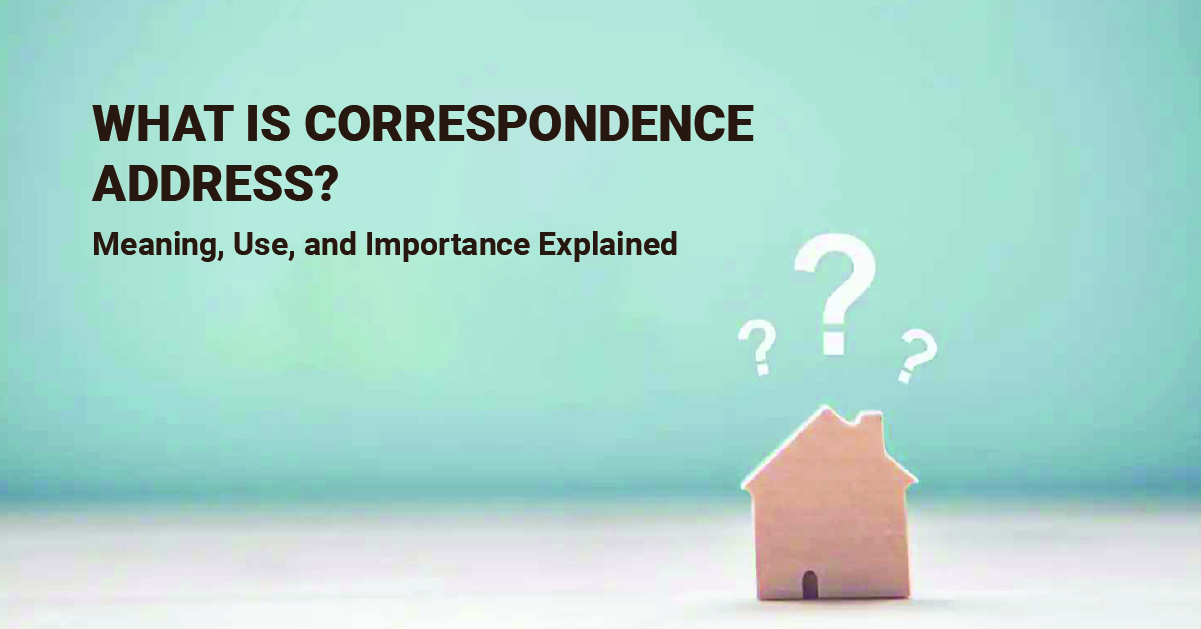
A correspondence address is the address used to receive official communication, notices, letters, and important updates.
In simple terms, a correspondence address means the communication address shared with banks, builders, employers, government departments, or service providers. It may be the same as a permanent address, but it can also be different.
For example, someone may have a permanent home in Chennai but may live in Hyderabad for work. In that case, the Hyderabad address can be used for communication. For property buyers, the correspondence address for the property usually means the address used for payment reminders, agreement updates, loan letters, and registration notices. This becomes useful when buyers are comparing residential projects, shortlisting locations, or evaluating homes offered by the best builders in Hyderabad or Chennai.
5 Reasons Why a Correspondence Address is Important
A correct correspondence address helps keep official, financial, and property-related communication clear, timely, and easy to track.
- Helps Receive Important Updates on Time Property buyers may receive booking details, payment reminders, agreement updates, and possession-related communication. A correct correspondence address helps ensure these updates reach the right person without delay. It also reduces the chances of missing important deadlines during the buying process.
- Supports Smooth Documentation Many forms, loan papers, and official records ask for a communication address. Accurate details reduce the chances of repeated corrections during documentation. This makes the process easier for buyers, lenders, builders, and legal teams.
- Reduces the Risk of Missed Notices Missed letters or notices can create confusion during property transactions. An updated address helps buyers stay informed about time-sensitive communication. It also helps maintain a clear communication trail for future reference.
- Makes Remote Property Buying Easier Some buyers purchase property while living in another city. A reliable correspondence address helps them receive updates even when they are away from the project location. This is especially useful for buyers managing documentation from a different city.
- Keeps Records More Organised A consistent address across forms, agreements, and financial documents makes record-keeping easier. It also helps avoid confusion during future communication. This can be useful during loan processing, registration, maintenance, or ownership updates.
Legal Framework for Correspondence Address in Property Matters
A correspondence address may look like a small detail, but it supports verification, documentation, and official communication during property-related processes.
- KYC Verification Banks and lenders often check address details during Know Your Customer (KYC) and loan-related processes. The Reserve Bank of India (RBI) lists officially valid documents such as a passport, a driving licence, Aadhaar proof, voter ID, Mahatma Gandhi National Rural Employment Guarantee Act (MGNREGA) job card, and National Population Register (NPR) letter for identity and address verification.
- Address Proof Updates Address accuracy is important across Aadhaar-linked records and other official documents. The Unique Identification Authority of India (UIDAI) states that document updates require Proof of Identity (PoI) and Proof of Address (PoA) documents, which makes updated records useful for buyers.
- Property Registration Property registration documents need the correct buyer, seller, and property details. Section 17 of the Registration Act, 1908, covers compulsory registration for certain documents linked to immovable property rights.
- Legal Notice Tracking A correct correspondence address helps buyers receive payment reminders, agreement updates, possession letters, loan communication, and legal notices. This can reduce confusion when multiple parties are involved in a property transaction.
- Record Consistency Incorrect or outdated address details can lead to repeated corrections across forms, loan files, and ownership records. Buyers should keep their correspondence address complete, current, and supported by valid proof wherever required.
Keep Your Property Journey Organised with the Right Address
Small details can shape how smoothly a property journey moves forward, and an updated correspondence address is one of them.
Before submitting any form, buyers should check that their communication address is complete, current, and supported by valid documents. This helps important updates reach the right place without confusion.
A clear address also gives buyers more control during documentation, loan processing, registration, and post-purchase communication. When this detail is handled early, the overall process feels more organised and easier to manage.
It can also reduce repeated follow-ups between buyers, lenders, and property teams. Keeping address details consistent across documents makes future reference simpler. This small step can support a more confident and well-planned property experience.