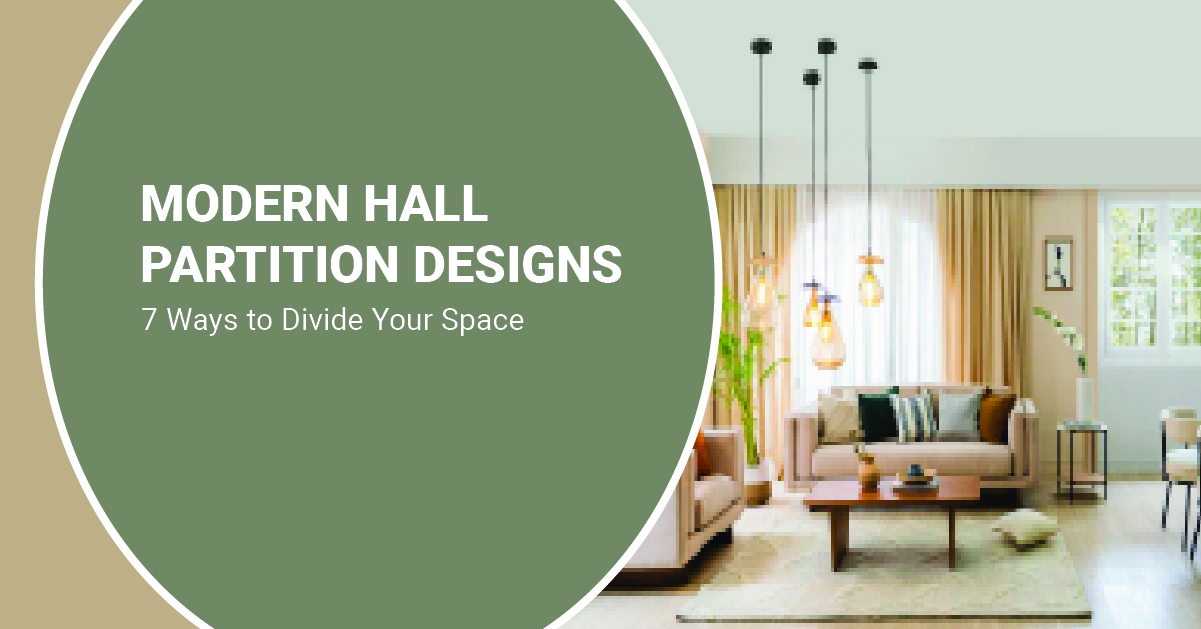
An open living area can make a home feel spacious, but completely open layouts do not always work for everyday routines. You may want the dining area to feel distinct from the living room without adding a solid wall that blocks light and movement.
The right partition can create this balance while also adding storage, texture, greenery, or an attractive focal point. A well-chosen modern partition design for the living room and dining hall can therefore serve a practical purpose without making either area feel disconnected.
Material, height, transparency, and lighting all influence how a partition changes the character of a room. The best option depends on how the space is used and the level of separation you prefer.
Let us explore seven ideas that can help you divide your hall while maintaining a sense of openness.
Table of Contents
- Modern Hall Partition Designs That Balance Style and Function
- How to Choose the Right Partition for Your Home
- Create Separation Without Losing the Sense of Space
Modern Hall Partition Designs That Balance Style and Function
These modern hall partition designs for the living room can help define separate zones while keeping the room visually connected. From transparent materials and open shelving to greenery, textured surfaces, and decorative lighting, each option offers a different balance of privacy, functionality, and style
- Use Frosted Glass to Separate Without Blocking Light
Glass can create a clear boundary between two areas while allowing natural or artificial light to travel through the space. Frosted finishes add privacy by softening the view without making the partition feel heavy.
For a modern partition design for a living room, consider a full-height frosted glass panel with a slim frame or a combination of clear and frosted sections. The amount of frosting can also be adjusted according to the privacy required.
- Make Your Partition Work as a Bookshelf
A bookshelf can divide two spaces while giving the room useful storage. Instead of creating a barrier that serves only one purpose, an open shelving unit can display books, plants, photographs, artwork, and decorative objects.
An open-backed design allows glimpses of the adjoining area, helping both zones remain visually connected. You can also vary the size of the compartments to create a more contemporary appearance.
- Create a Softer Divide With Greenery
Plants can introduce a natural visual boundary without the rigidity of a conventional partition. A vertical arrangement of indoor plants can separate the living and dining areas while adding colour and texture to the room.
Depending on the available light and maintenance routine, homeowners can choose suitable indoor plants or opt for artificial greenery. Tall planters, hanging arrangements, or a vertical plant frame can each create a different effect.
- Give the Traditional Jali a Contemporary Look
Jali screens have long been used to create separation while allowing air and light to move between spaces. Modern interpretations can use geometric patterns, clean lines, wood finishes, or metal detailing to give the traditional concept a contemporary appearance.
The spacing between the cut-outs can determine how open or private the partition feels. A denser pattern can provide greater visual separation, while wider openings maintain stronger connectivity between the two areas.
- Choose Curtains When You Want Flexibility
Not every partition needs to be permanent. Curtains offer a flexible way to divide a living and dining area whenever additional privacy or separation is needed.
Sheer curtains can maintain brightness and a lighter appearance, while heavier fabrics can create a stronger visual boundary. Neutral shades can blend with existing interiors, whereas textured or patterned fabrics can become a decorative element.
Curtains are also easy to open when you want a completely connected space. This makes them useful for homes where the layout needs to adapt to different occasions, gatherings, or everyday activities.
- Create a Slatted Wood Partition for Warmth and Openness
A slatted wood partition can define the living and dining areas while allowing light and air to move freely between them. The vertical lines add warmth and visual structure without creating a completely enclosed barrier.
Choose closely spaced slats for greater separation or wider gaps for a more open feel. The partition can also incorporate a wooden console, floating shelves, or subtle lighting to make the division both functional and decorative.
- Turn a Panel Screen Into a Lighting Feature
Decorative panel screens can become a striking focal point when paired with carefully positioned LED backlighting. Fluted surfaces, geometric patterns, wooden panels, and perforated designs can create different visual effects when illuminated.
Warm backlighting can highlight the pattern without making the partition excessively bright. The lighting can also add depth to the room during the evening, when natural light is no longer available.
How to Choose the Right Partition for Your Home
The best partition depends on more than appearance. Consider the size of the room, the amount of natural light, your privacy requirements, and how frequently you may want to change the layout.
Storage-based options can be useful in compact homes, while glass or open screens may work better where maintaining visual openness is important. Materials should also suit your cleaning routine and existing interior finishes.
In larger homes, including those considering a villa for sale in Hyderabad, Chennai, or Bangalore, the partition planning can be approached alongside the overall interior layout. This is to create distinct zones without making the space feel closed.
Create Separation Without Losing the Sense of Space
A good partition should make a room feel more organised without making it feel smaller. The right choice can define where one activity ends and another begins while preserving the visual connection that makes an open-plan home appealing. It can also help establish a natural flow between the living and dining areas without creating an unnecessary physical barrier.
Before choosing a design, consider how your family uses the space throughout the day, how much privacy each area needs, and what role you want the partition to play. Think about the available floor area, natural light, furniture placement, and ease of maintenance as well. A thoughtful combination of material, height, texture, storage, and lighting can turn a simple divider into an integral part of the home’s interior while keeping the overall space comfortable and visually balanced.