Plants can make a home feel fresher, calmer, and more welcoming. Beyond their decorative value, certain plants also hold significance in traditional vastu practices. They are often associated with prosperity, harmony, positivity, and well-being when placed in suitable areas of the home.
For people who follow these traditions, choosing vastu plants for home can add both greenery and symbolic meaning to their living spaces. However, these associations come from traditional beliefs rather than guaranteed outcomes. The plant should also suit the available sunlight, space, and maintenance routine. Here are 7 popular lucky plants for home and the vastu beliefs commonly associated with them.
Table of Contents
- 7 Vastu Plants That Bring Good Luck to Your Home
- Simple Vastu Tips for Keeping Plants at Home
- Bring Greenery and Traditional Vastu Elements Into Your Home
7 Vastu Plants That Bring Good Luck to Your Home
Different plants are traditionally connected with different forms of positive energy. Their appearance, placement, sunlight needs, and maintenance should all be considered before bringing them home.
- Tulsi
Tulsi, also known as holy basil, is one of the most recognised plants in Indian households. Traditional Vastu practices associate it with purity, positivity, and spiritual well-being. The north, north-east, and east directions are commonly considered suitable for Tulsi. A well-lit balcony, courtyard, or window area can provide the sunlight it requires.
Regular watering and good drainage can help keep the plant healthy. Dry or neglected plants should be removed or cared for promptly when following Vastu-inspired practices.
- Money Plant
Money plants are widely associated with prosperity, financial growth, and abundance in traditional Vastu beliefs. The south-east direction is often recommended for placing this plant. Its trailing growth also makes it suitable for shelves, hanging planters, balconies, and living-room corners.
Among popular lucky plants for home, the money plant is particularly convenient because it can be grown in either water or soil. It also requires relatively little space compared with many larger indoor plants.
- Lucky Bamboo
Lucky bamboo is commonly chosen for homes, study areas, and workspaces because of its compact appearance.
Traditional beliefs link it with prosperity, balance, peace, and steady progress. It is often placed in living spaces or on work desks where it receives indirect sunlight.
Keep the plant away from harsh direct sunlight and change the water regularly when it is grown without soil. Its simple form also makes it suitable for both traditional and contemporary interiors.
- Jade Plant
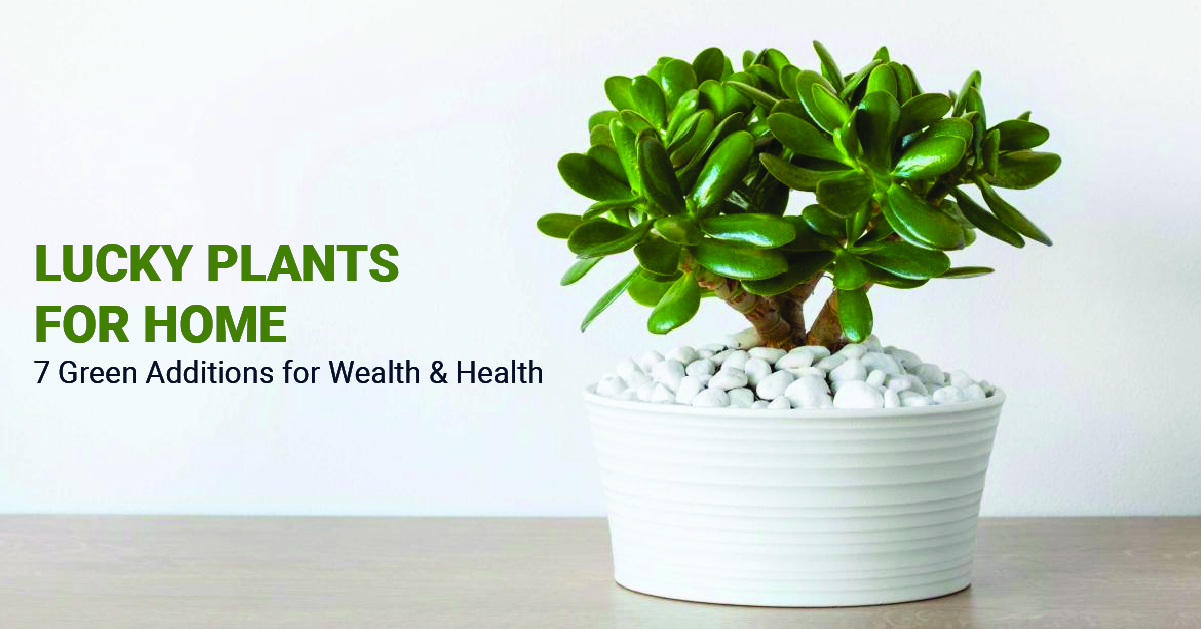
The jade plant has thick, rounded leaves and is traditionally associated with financial prosperity and stability. It is often placed near entrances, living areas, or in the south-east part of the home according to Vastu-inspired practices.
Jade plants prefer good light and moderate watering. Their compact size makes them particularly useful for shelves, side tables, window areas, and smaller balconies where larger plants may be difficult to maintain.
- Areca Palm
An areca palm can bring height, texture, and natural softness to an indoor setting. Traditional vastu practices often associate it with calmness, balance, and positive energy.
These vastu plants for home can work well in spacious living rooms, balconies, or bright corners. They usually prefer indirect sunlight and soil that remains moist without becoming waterlogged.
Their long, arching leaves can also soften empty corners and make larger indoor spaces feel more inviting.
- Rubber Plant
Rubber plants are known for their broad, glossy leaves and distinctive appearance. In Vastu-inspired traditions, rounded leaves are sometimes associated with wealth and abundance.
The plant generally works best in a bright location with indirect sunlight. Its larger size also means it needs sufficient room to develop comfortably.
Space planning therefore matters when introducing larger plants into a home. For example, someone setting up a house in Coimbatore may first assess the available light, ventilation, and room proportions before deciding which indoor plants will suit the living areas, balconies, or verandahs. The same approach can be followed when planning greenery in any home.
- Peace Lily
Peace lilies are popular for their white flowers and deep green foliage. They are often associated with peace, harmony, and tranquillity in modern vastu-inspired home planning.
They work particularly well in bedrooms, living rooms, study areas, and quieter indoor spaces that receive indirect light.
For those exploring vastu plants that bring good luck, the peace lily can be considered when the aim is to introduce softer greenery into the home. Moderate watering and suitable light are important for maintaining healthy leaves and flowers.
Simple Vastu Tips for Keeping Plants at Home
Selecting the right plant is only part of creating a Vastu-inspired green space. How plants are maintained and positioned can also influence how comfortably they fit into the home.
Keep a few practical points in mind:
- Choose healthy plants with fresh leaves and steady growth.
- Remove dried leaves and damaged branches regularly.
- Match each plant with its preferred amount of sunlight.
- Avoid overcrowding rooms with too many large plants.
- Use pots with suitable drainage.
- Keep plant containers and surrounding areas clean.
- Select plant sizes according to the available indoor or outdoor space.
These habits can help Vastu plants for home remain attractive while making them easier to maintain throughout the year.
Bring Greenery and Traditional Vastu Elements Into Your Home
There is no need to fill every room with greenery at once. Start with one or two plants that suit your available space, natural light, and daily maintenance routine. Then observe how well they grow before introducing additional varieties.
You can gradually add plants to entrances, balconies, living areas, workspaces, or quieter corners depending on their individual requirements. If you also follow vastu principles, use traditional placement guidance alongside practical plant-care needs. A thoughtful, gradual approach can help you create a greener home that feels balanced, manageable, and naturally connected to your everyday living spaces.