
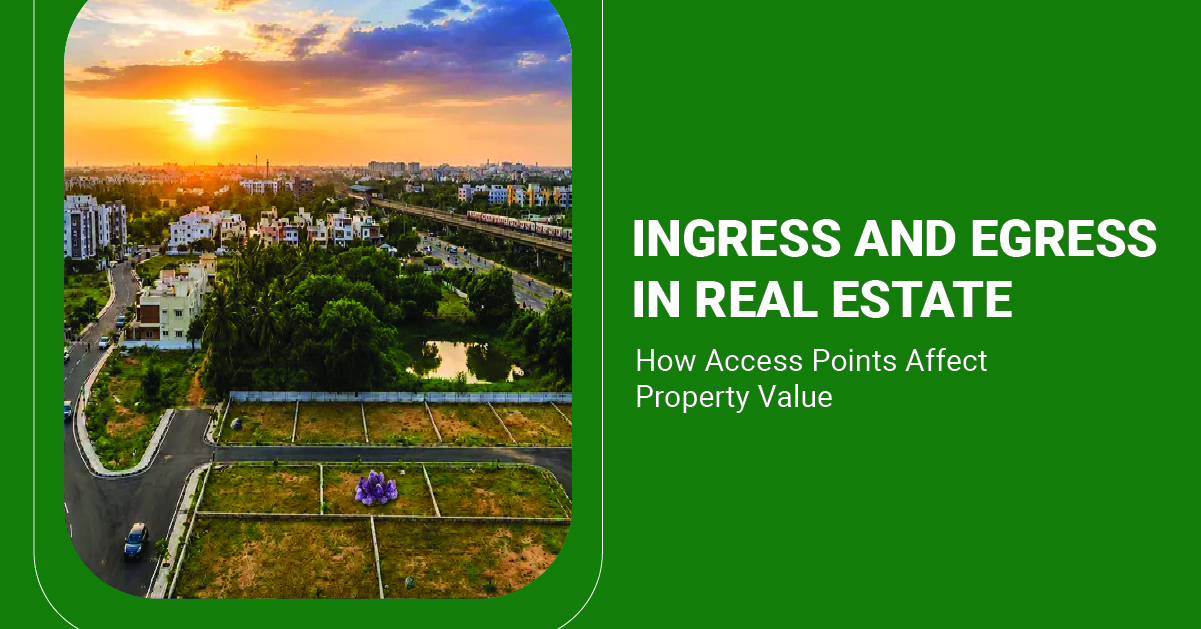
When assessing a property’s value, most homebuyers focus on factors such as location, amenities, neighbourhood infrastructure, and future growth potential. While these aspects are important, accessibility is another factor that can significantly influence a property’s desirability and long-term worth. The ability to enter and exit a property easily affects convenience, safety, and overall usability.
Understanding ingress and egress in real estate can help homebuyers make more informed decisions before purchasing a home or investment property. Access points may seem like a minor detail at first, but they can impact resale value, legal compliance, and development opportunities.
Let’s learn how property access influences value and why it deserves careful attention during your property search.
Table of Contents
- What is Ingress and Egress in Real Estate?
- The Impact of Ingress and Egress on Property Value: 7 Essential Considerations
- Evaluate Property Access Carefully to Protect Long-term Value
What is Ingress and Egress in Real Estate?
The ingress and egress meaning in real estate refers to the legal and physical ability to enter and leave a property. These rights are essential because every property must have practical access for residents, visitors, service providers, and emergency personnel.
- Ingress
Ingress refers to the right or means of entering a property. This can include access through public roads, private driveways, pathways, gates, or easements. Easy entry improves convenience and ensures the property can be used without unnecessary restrictions.
- Egress
Egress refers to the right or means of exiting a property. Safe and efficient exit routes are important for daily movement and emergency situations. Proper egress helps ensure occupants can leave the property quickly when needed.
The Impact of Ingress and Egress on Property Value: 7 Essential Considerations
Access points play a major role in determining how practical and desirable a property is. If you are exploring new apartments for sale in Hyderabad, Chennai, or any other cities, these are some of the reasons why you should evaluate access points:
- Easy Accessibility Increases Buyer Demand
Properties with convenient access are generally more attractive to homebuyers because they make daily commuting and travel easier.
A home that can be reached quickly through well-connected roads often creates a positive first impression and offers greater convenience for residents and visitors. Easy accessibility can also reduce travel time to schools, workplaces, shopping centres, and healthcare facilities.
As a result, properties with straightforward entry and exit routes tend to attract more interest in the market, which can contribute to stronger demand and better property values over time.
- Efficient Traffic Flow Enhances Property Functionality
The design and placement of access points can significantly affect traffic movement within and around a property.
Well-planned entry and exit routes help reduce congestion and allow vehicles to move safely and efficiently. In residential communities, smooth traffic flow creates a more comfortable environment for residents and guests.
In commercial developments, it can improve customer experiences and operational efficiency. Properties that minimise traffic-related challenges are often viewed more favourably because they offer greater convenience and functionality for daily use.
- Clear Legal Access Rights Protect Property Investments
Physical access alone is not enough; legal access rights are equally important. Homebuyers should ensure that all driveways, roads, and pathways leading to a property are legally documented and recognised.
Issues involving shared driveways, easements, or disputed boundaries can create complications that may affect ownership rights and future resale opportunities.
Properties with clear legal access arrangements provide greater certainty and reduce the likelihood of disputes. This legal clarity can strengthen buyer confidence and help preserve the property’s long-term value.
- Emergency Access Improves Safety and Compliance
Adequate access for emergency services is a critical factor in property planning and safety.
Fire engines, ambulances, and police vehicles must be able to reach the property quickly during emergencies. Many local planning regulations require developments to meet specific access standards to ensure public safety.
Properties that provide unobstructed entry and exit routes for emergency responders are generally considered safer and more compliant with regulatory requirements. This can increase their appeal among homebuyers and support long-term property value.
- Commercial Properties Benefit from Better Accessibility
For commercial real estate, accessibility can directly influence business performance. Customers, employees, suppliers, and service providers all depend on convenient access to the property.
Locations with efficient entry and exit points are often more attractive to businesses because they improve operational convenience and customer satisfaction. Better accessibility can also contribute to higher tenant retention and occupancy rates.
These advantages can enhance the property’s income-generating potential and positively affect its market value, making accessibility a key consideration for commercial investors.
- Development Potential Depends on Access Infrastructure
Access infrastructure plays an important role in determining a property’s future development possibilities. Builders often assess road connectivity and access rights before purchasing land because these factors can influence project feasibility.
Properties with direct road access are typically easier to develop and may require fewer additional infrastructure investments.
In contrast, limited access can lead to higher development costs and approval delays. Strong access infrastructure can therefore increase a property’s attractiveness to developers and support higher market valuations.
- Restricted Access Can Negatively Affect Property Value
Limited or poorly designed access can create concerns for homebuyers and investors. Narrow roads, difficult entry points, shared driveways, or poorly maintained access routes may reduce convenience and create potential safety issues.
Restricted access can also affect the movement of service vehicles and emergency responders. These challenges may make a property less appealing when compared with similar options that offer better accessibility.
Consequently, properties with access limitations may experience lower demand, reduced resale potential, and slower value appreciation.
Evaluate Property Access Carefully to Protect Long-term Value
Property accessibility plays a vital role in determining usability, safety, convenience, and investment performance. Understanding ingress and egress allows homebuyers to assess factors that may influence a property’s value long after the purchase is complete.
From legal access rights and emergency vehicle entry to development opportunities and resale appeal, access points affect multiple aspects of property ownership. Before making a purchase decision, it is important to review access arrangements, easements, road connectivity, and local regulations. A property with clear and convenient access can support stronger demand, greater functionality, and improved marketability over time.
By carefully evaluating accessibility alongside other important factors, homebuyers can make more confident decisions and protect the long-term value of their real estate investment.