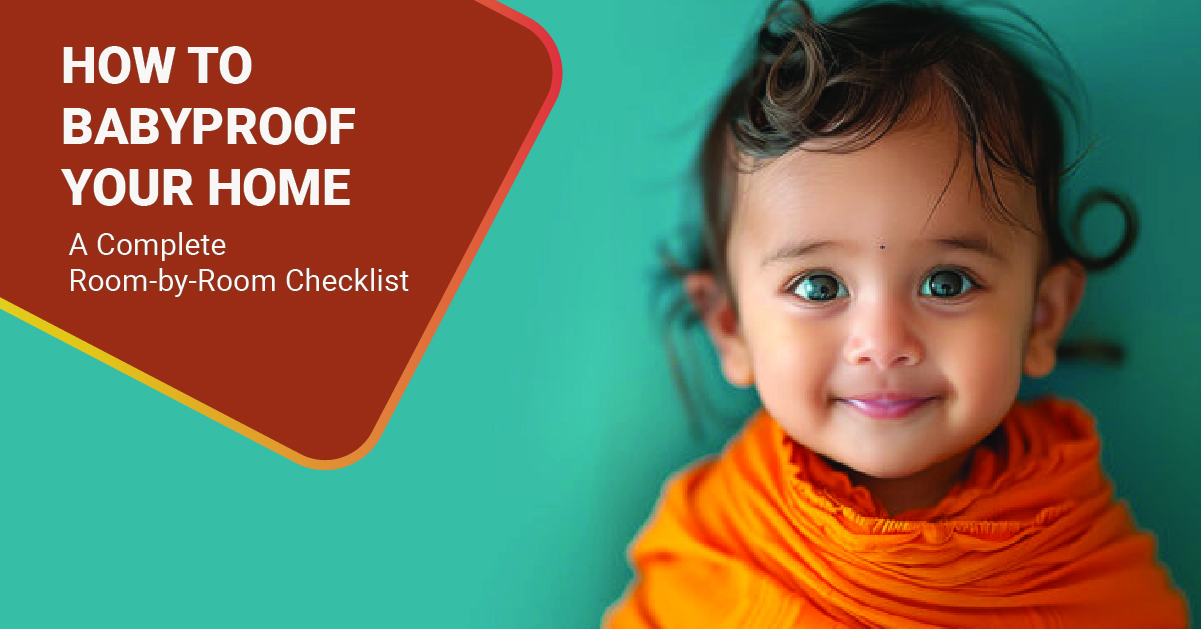
A home can look completely safe until a baby begins crawling, reaching, pulling, and exploring independently. Everyday objects such as drawers, electrical cords, furniture edges, medicines, and staircases can suddenly become areas that need closer attention.
Learning how to babyproof your home is therefore less about changing the way your home looks and more about seeing each room from your baby’s perspective. As mobility increases, safety measures may also need to change.
If you are wondering how to childproof your home without overlooking important areas, a room-by-room approach can make the process easier. Let’s look at a practical checklist to help you get started.
Table of Contents
- Checklist to Babyproof Your Whole Home
- Make Home Safety Part of Everyday Living
Checklist to Babyproof Your Whole Home
Every part of the home presents different safety considerations as a baby begins crawling, standing, and exploring independently. Here are the key areas to review when learning how to babyproof your home effectively.
-
- Living Room: Secure the Everyday Gathering Space
The living room is often where babies spend considerable time playing and exploring. Start by getting down to your baby’s eye level and looking for objects that are easy to pull, climb, grab, or knock over.
-
-
- Secure televisions, bookshelves, cabinets, and other heavy furniture appropriately.
- Keep electrical cables organised and inaccessible wherever possible.
- Cover or protect sharp furniture corners and edges.
- Keep coins, batteries, remote controls, and other small objects away from the floor.
- Move fragile decorative items to higher shelves.
- Kitchen: Control Access to Heat, Sharp Objects, and Chemicals
-
The kitchen contains several items that children may find interesting but should not be able to reach. When considering how to babyproof your home, pay particular attention to lower cabinets, drawers, appliances, and worktops.
Install suitable safety catches on cupboards containing potentially unsafe items. Keep knives, scissors, matches, cleaning products, dishwasher tablets, and similar products securely stored.
You should also:
-
-
- Keep pan handles turned away from accessible edges while cooking.
- Place hot drinks away from worktop and table edges.
- Keep appliance cables away from small hands.
- Store plastic bags and food wrappers securely.
- Keep cleaning products high up or inside properly secured cupboards.
- Bedroom and Nursery: Create a Safer Sleep and Play Area
-
A nursery may appear calm and uncluttered, but safety needs can change quickly as a baby learns to sit, stand, and climb.
Position the cot away from windows, blind cords, electrical cables, radiators, and furniture that could create additional hazards. Bags, cords, and drawstrings should not be hung from the cot or nearby furniture.
Check the room regularly for:
-
-
- Loose cords or wires.
- Small objects accessible from the floor.
- Unsecured chests of drawers or shelving.
- Cosmetics, medicines, or personal-care products within reach.
- Furniture positioned close enough to help a child climb towards a window.
-
As your baby grows, repeat this inspection because something that was inaccessible several weeks ago may suddenly become reachable.
-
- Bathroom: Reduce Risks Around Water and Storage
Bathrooms require particularly close supervision because water, slippery surfaces, medicines, toiletries, and electrical appliances can all be present within a small space.
Keep medicines, razors, cosmetics, cleaning products, and electrical appliances securely stored. Use a non-slip bath mat and check the water temperature before placing your child in the bath.
Most importantly, never rely solely on babyproofing equipment around water. Babies and toddlers require direct adult supervision during bath time.
Other useful checks include:
-
-
- Keep the toilet lid closed when it is not being used.
- Store buckets and containers empty.
- Keep hairdryers, straighteners, and cables inaccessible.
- Remove small toiletry caps or other potential choking hazards.
- Keep floor surfaces as dry and clear as possible.
- Staircases and Hallways: Plan for Crawling and Climbing
-
Stairs can become interesting to babies surprisingly quickly. Once your child starts crawling or moving independently, access to staircases needs careful management.
Safety gates may be used at the top and bottom of stairs where appropriate.
You should additionally:
-
-
- Keep toys, shoes, and bags off stairways.
- Check railings for openings a child could access.
- Secure loose rugs that could cause slipping.
- Keep doors leading to unsuitable areas secured.
- Avoid leaving objects on steps, even temporarily.
-
Understanding how to childproof your home means thinking about routes between rooms, not just what is inside each individual space.
-
- Balconies, Windows, and Outdoor Areas: Review Access Carefully
Homes with balconies, terraces, gardens, or multiple levels may require additional safety planning.
Make sure balcony doors, windows, terrace entrances, and outdoor gates cannot be easily opened by a young child. Furniture should not be positioned where it could help a child climb towards an open window or balcony edge.
Also check:
-
-
- Garden tools are stored securely.
- Water features are inaccessible without adult supervision.
- Outdoor cleaning products and chemicals are locked away.
- Balconies remain free from easily climbable furniture.
- Window restrictors or suitable safety measures are used where needed.
-
Babyproofing requirements can also differ according to the type and size of the property. Apartments may require greater attention around balconies and windows, while larger homes can include staircases, terraces, gardens, utility areas, and multiple access points.
Families considering spacious residential options such as villas in Tiruppur or Poondi may therefore want to think about child safety across indoor and outdoor areas when planning how different spaces will be used.
Make Home Safety Part of Everyday Living
A safer home does not need to feel restrictive. Good babyproofing simply helps children explore their surroundings while reducing access to avoidable household hazards.
Knowing how to babyproof your home room by room makes it easier to identify areas that deserve attention, from kitchen cupboards and bathroom storage to staircases, windows, and balconies. At the same time, safety devices should support rather than replace careful adult supervision.
As your child learns new movements and reaches new heights, revisit each room and adjust your precautions. A home that evolves with your child’s development can provide a more comfortable environment for both exploration and everyday family life.