
Table of Contents
- Griha Pravesh Muhurat: Meaning and Significance
- Types of Griha Pravesh
- Griha Pravesh Dates for 2026
- Best Months For Griha Pravesh Puja
- Which are the Best Festivals for Griha Pravesh in 2026?
- How are Griha Pravesh Dates Calculated?
- Vastu Guidelines For Griha Pravesh Puja
- Tips Before Planning Your Griha Pravesh Ceremony
- Dos and Don'ts For Griha Pravesh Ceremony
- Stepping into a Home That Reflects Prosperity
- Conclusion
- FAQs
Griha Pravesh Muhurat: Meaning and Significance
A Griha Pravesh ceremony is the first entry into a newly built or renovated home. It is a sacred Vedic tradition meant to align the living space with cosmic energies. Selecting a Griha Pravesh muhurat ensures that the inhabitants transition into their new environment during a period of high positive vibrations.
1. Religious and Spiritual Significance
In Indian culture, a house is a living entity that absorbs the energies of its surroundings. By choosing an auspicious time, homeowners aim to invite divine grace while ensuring a smooth transition free of celestial obstructions.
The term “Muhurat” refers to a specific window of time where the planetary positions are most favourable for a particular activity. The ceremony is primarily a gesture of gratitude toward the deities and ancestors.
By performing a Puja before moving in, the family seeks blessings for a peaceful life. It marks the sanctification of the physical structure, turning a house into a home where spiritual growth can flourish.
Spiritually, the ceremony acknowledges that the land and the materials used for construction belong to the Earth, and by performing these rituals, we seek permission and blessings to reside there. The presence of a priest, the chanting of Vedic hymns, and the lighting of the sacred fire serve to create a spiritual anchor for the family.
2. Vastu Purification and Dosha Removal
Every new construction may have inherent Vastu Doshas or energetic imbalances caused by the construction process. An auspicious day for Griha Pravesh is chosen specifically to neutralise these negative influences. The construction process involves digging and moving materials, which can disrupt the natural flow of energy.
The performance of Homa (fire ritual) and the sprinkling of holy water cleanse the space of any residual stagnant energy. This purification process ensures that the “Vastu Purusha,” the deity of the structure, is satisfied and protective of the residents.
3. Health and Well-being Benefits
Living in a space that has been spiritually “activated” directly impacts the mental and physical health of residents. A ceremony performed during a good day for Griha Pravesh fosters a sense of psychological security and reduces stress, promoting overall vitality and longevity.
According to traditional beliefs, a home cleansed of negativity prevents the onset of minor ailments and lethargy. The peaceful environment created by the initial Puja helps the mind settle into the new surroundings, ensuring the occupants feel more energised in their new sanctuary.
4. Financial Prosperity and Success
In Vedic astrology, specific planets govern wealth and career. Conducting the housewarming during a calculated Griha Pravesh Muhurat in 2026 helps in attracting the favour of Lakshmi and Kuber. This alignment is believed to ensure a steady flow of income and the successful completion of professional goals.
For business owners and professionals, entering a home when the Moon and Jupiter are in strong positions can lead to career growth and asset accumulation. The ritual of boiling milk until it overflows symbolises this wealth and abundance.
5. Family Harmony and Relationships
The energy of a home dictates the interpersonal dynamics of those living within it. A Puja conducted on auspicious dates for Griha Pravesh fosters compassion, understanding, and bonding among family members, creating a sanctuary of love rather than a place of conflict.
A balanced Vastu ensures clear communication between family members, free of unnecessary ego. By starting the journey in a new home with shared prayers and a common meal, the family strengthens its bonds, ensuring the home remains a place of joy and mutual support.
6. Protection from Evil and Negativity
The ritual acts as a spiritual shield for the household. By inviting divine energies during the Griha Pravesh puja time, the family creates a protective barrier that wards off “Nazar” (evil eye) and external negative influences that could disrupt the peace of the home. This is particularly important when moving into a new neighbourhood where the surrounding energies are unfamiliar.
The installation of a “Toran” (door hanging) and the breaking of a coconut at the entrance are traditional methods to deflect negative vibrations and ensure that only positive intentions cross the threshold.
Types of Griha Pravesh
Here are the main types of Griha Pravesh ceremonies you should know about:
1. Apoorva Griha Pravesh
This is performed when a family first enters a newly constructed house on a newly selected plot of land. It is considered the most significant type of housewarming.
Since the current owners have never lived on the land, the rituals are more detailed, including Vastu Shanti and Ganesh Puja. These ceremonies help create a fresh connection between the inhabitants and the Earth.
2. Sapoorva Griha Pravesh
This occurs when a family re-enters an existing home after a long absence, such as after a journey or living abroad. The rituals are performed to re-awaken the home’s energy.
Even if the house was previously occupied, the absence of human activity can lead to a buildup of “Vaasi” or stale energy, which needs to be cleared before the family resumes their life there.
3. Dwandhav
This type of ceremony is held when a family moves back into a home that has undergone extensive renovation or reconstruction after being damaged by natural disasters such as fire, wind, or flooding. It is also applicable after significant structural changes.
The purpose here is to acknowledge the house’s transformation and ensure that the new structures are integrated into the property’s existing spiritual fabric.
Griha Pravesh Dates for 2026
The following table highlights the most prominent Griha Pravesh dates for the upcoming year based on the Hindu Lunar calendar. These dates have been selected based on the combination of favourable Tithis and Nakshatras.
| Date | Day | Muhurat Timing |
| January 25, 2026 | Sunday | 7:12 AM to 11:30 AM |
| February 12, 2026 | Thursday | 8:20 AM to 02:15 PM |
| March 20, 2026 | Friday | 6:40 AM to 10:50 AM |
| April 18, 2026 | Saturday | 9:15 AM to 01:40 PM |
| May 06, 2026 | Wednesday | 5:55 AM to 12:20 PM |
| June 15, 2026 | Monday | 7:30 AM to 12:10 PM |
| November 15, 2026 | Sunday | 6:50 AM to 11:10 AM |
| December 10, 2026 | Thursday | 7:05 AM to 01:25 PM |
| December 24, 2026 | Thursday | 8:00 AM to 11:45 AM |
Best Months For Griha Pravesh Puja
According to Shastra, the most favourable months are usually those that fall under the Uttarayan period, when the Sun travels northward.
| Favourable Months | Status | Reason |
| Magha, Phalguna, Vaishakha, Jyeshtha | Highly Recommended | Align with growth, clarity, and solar energy |
| Kartika, Margashirsha | Moderate | Acceptable for certain renovations (Dwandhav) |
| Ashadha, Shravana, Bhadrapada, Ashvina | Avoid | Period of Chaturmas; reserved for penance |
Which are the Best Festivals for Griha Pravesh in 2026?
Festivals often bring with them auspicious Griha Pravesh days, as the atmosphere is charged with collective devotion and celebration.
| Festival | Date (2026) | Significance for Griha Pravesh |
| Buddha Purnima | May 1 | Symbolises peace, harmony, and spiritual growth |
| Narasimha Jayanti | May 10 | Represents protection from negative energies |
| Dussehra | October 20 | Represents victory of good over evil, ideal for new beginnings |
| Dhanteras | November 5 | Associated with wealth, prosperity, and new beginnings |
How are Griha Pravesh Dates Calculated?
Astrologers calculate these dates by analysing multiple time-based and celestial factors to identify the most favourable moment for entering a new home.
1. Tithi (Lunar Day)
The calculation begins with analysing the Tithi, or lunar day, as it reflects the Moon’s phase and its influence on human activities. Certain Tithis are considered more favourable for starting a new chapter in a home.
2. Vaar (Day of the Week)
The day of the week is carefully selected, as each day carries its own significance. Some days are believed to bring stability and prosperity, while others are generally avoided for housewarming ceremonies.
3. Nakshatra (Constellation)
Astrologers study the Nakshatra to ensure long-term harmony. Fixed Nakshatras such as Rohini, Mrigashirsha, Chitra, and Anuradha are preferred because they are associated with stability and growth.
4. Sun’s Position and Zodiac Alignment
The position of the Sun is evaluated in relation to the homeowner’s zodiac sign. A favourable alignment is believed to support well-being and positive energy within the household.
5. Avoidance of Inauspicious Days
Certain periods, such as Tuesdays and Amavasya (New Moon), are typically avoided. These times are considered less suitable for beginning a new phase of life.
6. Panchang Alignment
Finally, the Panchang, which includes five key elements of time, is assessed as a whole. The goal is to identify a moment where all factors align to support harmony, prosperity, and a positive start in the new home.
Vastu Guidelines For Griha Pravesh Puja
To ensure the best results, the house should be fully completed with doors, windows, and the roof intact before the Puja. Moving into an incomplete house is considered a Vastu defect.
- Main Entrance: Decorate with mango leaves and marigold flowers to welcome deities.
- Ishan Kon (Northeast): Keep this corner clean and occupied by the Puja setup; it is the zone of water and supreme consciousness.
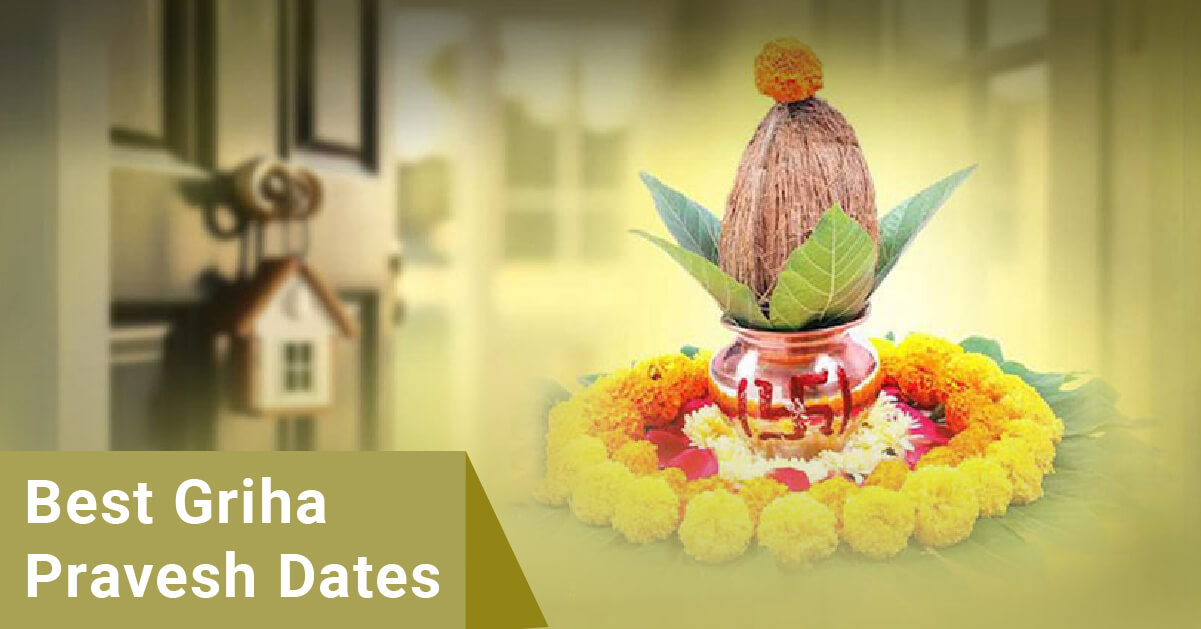
- Kalash Placement: Place a copper Kalash filled with water and coins in the northeast corner to ground positive energy.
- Kitchen: The first meal should be prepared in the kitchen, following the ritual of boiling milk.
Tips Before Planning Your Griha Pravesh Ceremony
Before the ceremony begins, ensure you have gathered all necessary items for the grihapravesam puja. It is advisable to clean the entire house with salt water to remove physical and energetic impurities.
| Essential Puja Items | Significance |
| Copper Kalash | Represents the universe and abundance |
| Mango Leaves | Symbolise fertility and purity |
| Turmeric and Vermillion | Used for sanctification and tilaks |
| Five Metals (Panchadhatu) | Grounding cosmic energy into the foundation |
| Fresh Flowers | Invite positive vibrations and fragrance |
Plan your guest list in advance, but prioritise the spiritual rituals before the social celebration begins. Ensure that the plumbing and electrical systems are functional, as the actual “living” in the house begins the moment the Puja ends.
Dos and Don'ts For Griha Pravesh Ceremony
Following a few essential dos and don’ts helps ensure that the Griha Pravesh ceremony is conducted with the right intent.
| Dos | Don’ts |
| Enter with the right foot first | Do not leave the house empty for 24 hours |
| Boil milk until it overflows | Do not perform the puja if a death occurred recently in the family |
| Break a coconut at the threshold | Do not move furniture before the rituals are finished |
| Offer food to the priest and the needy | Do not lock the house and leave immediately after puja |
Stepping into a Home That Reflects Prosperity
Choosing the best nakshatra for Griha Pravesh and a balanced Tithi ensures that your home remains a source of joy for generations. Prosperity is about the quality of life and the peace of mind you experience within your four walls. By honouring these traditions, you lay the foundation for a successful future. A home that is built with care and inaugurated with prayer becomes a sanctuary against the chaos of the outside world.
As you step across the threshold, do so with a heart full of gratitude and a mind focused on the new memories you will create.
Conclusion
Finding the right Griha Pravesh muhurat is the first step toward a harmonious life in a new space. By aligning your move with the celestial calendar and following Vastu principles, you invite health, wealth, and happiness into your residence.
The effort to respect these ancient guidelines pays dividends in the form of a stable, flourishing domestic life. May your new home be filled with light, laughter, and lasting positive energy for all the years to come.
FAQs
Which is the best month for Griha Pravesh in 2026?
The best month for Griha Pravesh usually falls within the lunar months of Magha, Phalguna, Vaishakha and Jyeshtha. In 2026, many families prefer late January, February and May, as these periods are considered especially auspicious for inviting peace and prosperity into the home.
What are common mistakes during Griha Pravesh?
A common mistake is selecting an unsuitable lunar date. When identifying the best dates for Griha Pravesh, it is advisable to avoid eclipses and Tuesdays. Leaving the house empty overnight after the pooja may also reduce the positive energy created during the ceremony.
Can we move household items before Griha Pravesh Pooja?
Ideally, it is best to wait for the most suitable muhurat to shift into the new house before moving heavy furniture. While small items may be moved earlier, bringing in essentials such as the stove or bed before the ceremony is generally discouraged to maintain the sanctity of the space.
What is the significance of boiling milk in the new house?
Boiling milk until it overflows symbolises abundance and nourishment. Performing this ritual during the best Muhurat for Griha Pravesh is believed to bless the household with prosperity and mark a smooth and successful transition into the new home.
Which is a good date for house warming?
A good date for a house warming ceremony depends on the Hindu Panchang. Typically, Dwitiya, Tritiya, Panchami, Saptami, Dashami and Ekadashi during the Shukla Paksha are considered favourable. Consulting a priest helps align these dates with one’s zodiac sign for better results.
What is the first thing to bring to a new house for good luck?
Traditionally, one enters with a kalash filled with water and topped with a coconut. Entering during a favourable nakshatra for Griha Pravesh enhances this practice. Many households also bring an idol of Lord Ganesha first to remove obstacles.
What items should be carried when entering a new house?
During the best muhurat for Griha Pravesh, it is customary to carry symbolic items representing the five elements: water, sweets, grains, incense and a diya. These signify balance, nourishment and positivity within the home.
What is the best nakshatra for Griha Pravesh in 2026?
The best Nakshatra for Griha Pravesh in 2026 include Rohini, Mrigashirsha, Uttar Phalguni, Uttarashada and Uttara Bhadrapada. These are considered stable constellations, believed to support long-term happiness and harmony in the household.