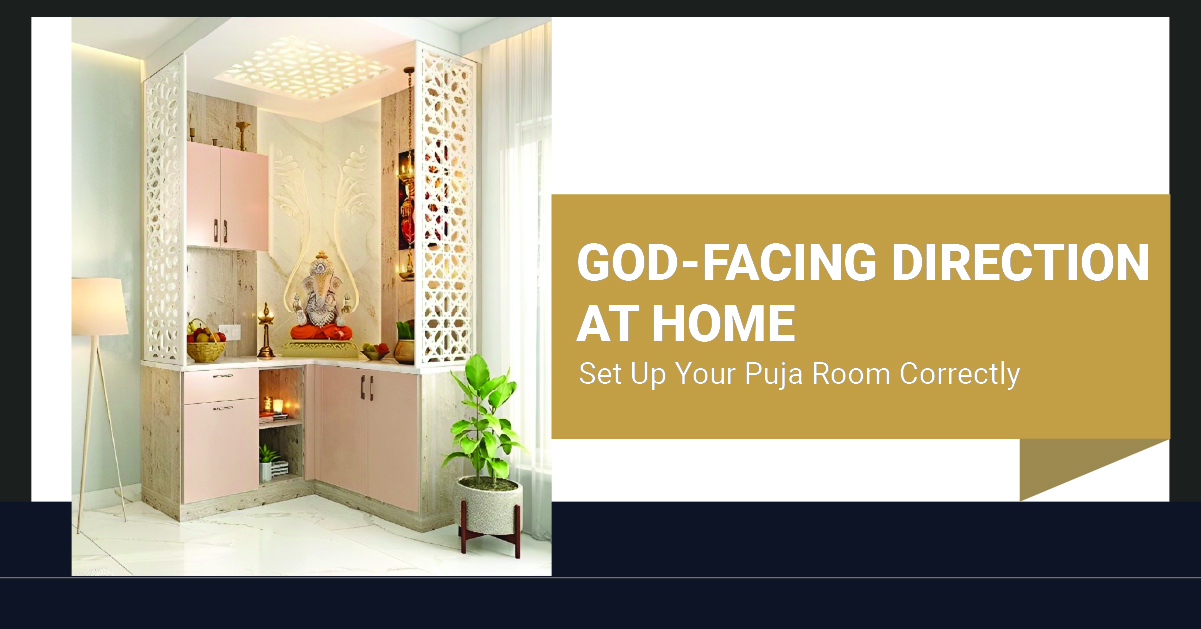
The first rays of sunlight, the glow of a diya, and a few quiet minutes of prayer can make your home feel deeply peaceful. Your puja room gives you a dedicated space to pause, reflect, and connect with your spiritual practices. Vastu Shastra also gives importance to the location of this space, the placement of idols, and their orientation within the home.
If you are planning a new prayer space, understanding “which direction should god face in the home?” can help you make a thoughtful choice. From selecting the right corner to positioning the deity and maintaining the surroundings, every detail can shape your prayer experience.
Let’s discover practical Vastu guidelines that can help you create a serene and well-arranged puja space.
Table of Contents
- Why is it Important to Have God-facing Direction in a Home?
- Which Direction is Best for a Puja Room?
- Which Direction Should God Face in a Puja Room?
- What are the Essential Vastu Rules for a Puja Room?
- Set Up Your Puja Room with the Right Direction and Placement
Why is it Important to Have God-facing Direction in a Home?
The direction of your puja space is traditionally considered important when creating a harmonious setting for worship.
- Directional Significance in Vastu Shastra
Vastu Shastra is a traditional system that assigns significance to different directions within a home. Each direction is associated with particular elements, energies, and symbolic meanings.
These principles are commonly considered while planning spaces such as entrances, bedrooms, and puja rooms. Following them can help you create a prayer area that feels purposeful and peaceful.
- Deity Orientation and Prayer Space
The position of your deity is another important aspect of traditional puja room planning. The direction in which an idol faces determines the direction you face while praying.
This orientation is considered significant for creating a focused setting for worship. You should also leave enough room for comfortable movement during regular rituals.
- Creating a Peaceful and Balanced Puja Environment
A thoughtfully arranged puja area can make your daily rituals feel more comfortable. Keep the surroundings clean, organised and free from unnecessary objects.
Natural light, ventilation and suitable storage can further improve the space. These practical choices can complement traditional Vastu preferences.
Which Direction is Best for a Puja Room?
Choosing the right location is the first step towards creating a dedicated and peaceful space for daily worship.
- Northeast as the Most Auspicious Direction
The northeast corner, traditionally known as the Ishanya corner, is generally considered the most auspicious location for a puja room. It is associated with purity and spiritual awareness in Vastu traditions.
If your home’s layout permits, you can consider placing your dedicated prayer area here. Keep the space bright, clean, and free from unrelated household items.
- East for New Beginnings and Positive Energy
The east is associated with sunrise, freshness and new beginnings. This makes it another favourable direction when the northeast is unavailable.
You can consider a dedicated corner along the eastern side of your home. Keep the area tidy and ensure it has adequate light and ventilation.
- North as a Practical Choice for Compact Homes
The north can also be considered for a puja space, particularly when you have limited room. This option can work well in apartments where a separate prayer room may not be practical.
A compact shelf, cabinet, or dedicated corner can define the space. You can also use a partition to separate it visually from the rest of the room.
For homebuyers considering flats in Bangalore, Chennai or any other area, these principles can help you assess the potential placement of a puja space before finalising a home.
Which Direction Should God Face in a Puja Room?
After selecting the room or corner, focus on positioning the deity according to traditional Vastu preferences.
| Idol Direction | Vastu Guidance | Key Consideration |
| West | Traditionally preferred | Lets you face east while praying. Keep the idol raised and slightly away from the wall. |
| East | Suitable alternative | Works when the layout requires it. Keep the idol secure with enough space around it. |
| South | Generally avoided | Considered less favourable in traditional Vastu. Prefer west or east-facing idols where possible. |
What are the Essential Vastu Rules for a Puja Room?
Direction is important, but several placement and maintenance practices can also shape your puja space.
- Placing Idols on a Raised and Stable Platform Place your idols on a sturdy platform, pedestal, or shelf rather than directly on the floor. A raised position can also make the idols easier to clean and maintain. Ensure the surface is stable and can safely support the idols. Leave a small gap between the idols and the wall where possible.
- Maintaining the Right Idol Height and Wall Clearance Traditional guidance often recommends keeping idols at a moderate height rather than using excessively large statues. Idols of around 9 inches or less are commonly suggested for home puja spaces. Choose a size that suits the room without making it feel crowded. Keep sufficient space around each idol for cleaning and rituals.
- Avoiding Puja Spaces Under Staircases A space beneath a staircase may appear convenient in a compact home, but traditional Vastu principles generally discourage using it for worship. Such areas can feel enclosed and may receive limited natural light. Instead, look for an open corner that can be kept clean. A compact dedicated unit can also work well.
- Keeping the Puja Area Separate from Bedrooms and Kitchens A dedicated puja room is generally preferred over placing the shrine inside a bedroom or kitchen. These areas serve different household purposes and may not provide the quiet setting you want for prayer. If space is limited, use a screen, cabinet, or partition. This creates a clearer distinction between the prayer area and the rest of your home.
- Ensuring Adequate Natural Light and Ventilation Natural light can make your puja room feel bright, fresh and welcoming. Good ventilation is equally useful, particularly when you regularly light diyas or incense. Avoid placing the shrine in a dark or poorly ventilated corner. A window or well-lit area can make the space more comfortable.
Set Up Your Puja Room with the Right Direction and Placement
The direction of your deity can play an important role when you plan a home puja space according to traditional Vastu principles. If you are wondering which direction the god should face, west is generally preferred, allowing you to face east during prayer.
East-facing placement can also work when your home’s layout requires it, while south-facing idols are traditionally avoided. The northeast remains the preferred location for the puja room, with east and north offering alternatives. Ultimately, choose a clean, bright and dedicated space that suits your home.
Review your layout carefully, position your idols thoughtfully, and create a serene corner where you can practise your daily prayers with greater focus and comfort.