Land records in Karnataka contain critical information that many buyers overlook. One document plays a central role in every agricultural property transaction, yet its contents remain unclear to many.
This revenue record carries the full history of ownership, cultivation patterns, and legal status for every survey number across the state. Accessing it online has never been easier, but understanding what you’re looking at requires deeper knowledge.
The Bhoomi Karnataka land records portal makes this critical document accessible to anyone with internet access. Whether you need online RTC Karnataka for verification or want to understand Bhoomi online RTC Karnataka requirements, this guide walks you through everything step by step.
Table of Contents
- What is RTC in Karnataka: Full Form and Meaning
- Key Information Contained in an RTC
- How to Access Bhoomi Karnataka Land Records Online
- Common Issues in RTC Records and How to Resolve Them
- Protecting Your Investment Through RTC Due Diligence
- FAQs
What is RTC in Karnataka: Full Form and Meaning
RTC stands for Record of Rights, Tenancy, and Crops. The full form of RTC reveals exactly what this document tracks: ownership rights, tenancy arrangements, and agricultural crop patterns for every surveyed land parcel in Karnataka.
This revenue record is maintained by the Village Accountant (Gram Lekhadikari) under the Karnataka Revenue Department and updated every crop season, covering both Kharif and Rabi periods. The Bhoomi RTC Karnataka system digitises these records, making them accessible through the state’s centralised land records portal.
In local usage, the RTC is commonly called Pahani, derived from the Kannada word “Pahaani” meaning to see or inspect. While government communications and the Bhoomi Karnataka land records portal use “RTC” officially, buyers, brokers, and lawyers frequently use “Pahani” in everyday conversations. Both terms refer to the same document.
Key Information Contained in an RTC
The RTC is a multi-column document that acts as a comprehensive snapshot of a specific land parcel. Here are the five key categories of information it contains:
The RTC is a comprehensive document that acts as a snapshot of a specific land parcel. Here are the five key categories of information it contains:
| Information Category | What It Contains |
| Ownership Details | Current owner’s name, family details, address, and nature of ownership rights (full rights, partial rights, or government tenant) |
| Land Area and Survey Details | Total area in acres, guntas, and square feet, plus survey number, surnoc, and hissa number that uniquely identify the land parcel |
| Land Classification and Soil Type | Whether the land is dry, wet, or garden land, along with soil type and irrigation details that determine agricultural potential and conversion eligibility. This verification is critical when you buy an apartment in Bangalore, as many developments in peripheral areas sit on converted agricultural land |
| Cultivation and Crop Information | Crops cultivated during Kharif and Rabi seasons, area under cultivation, and whether the land was farmed or left fallow |
| Tenancy and Encumbrance Details | Tenant possession status, plus details of loans, mortgages, or legal disputes registered against the property |
How to Access Bhoomi Karnataka Land Records Online
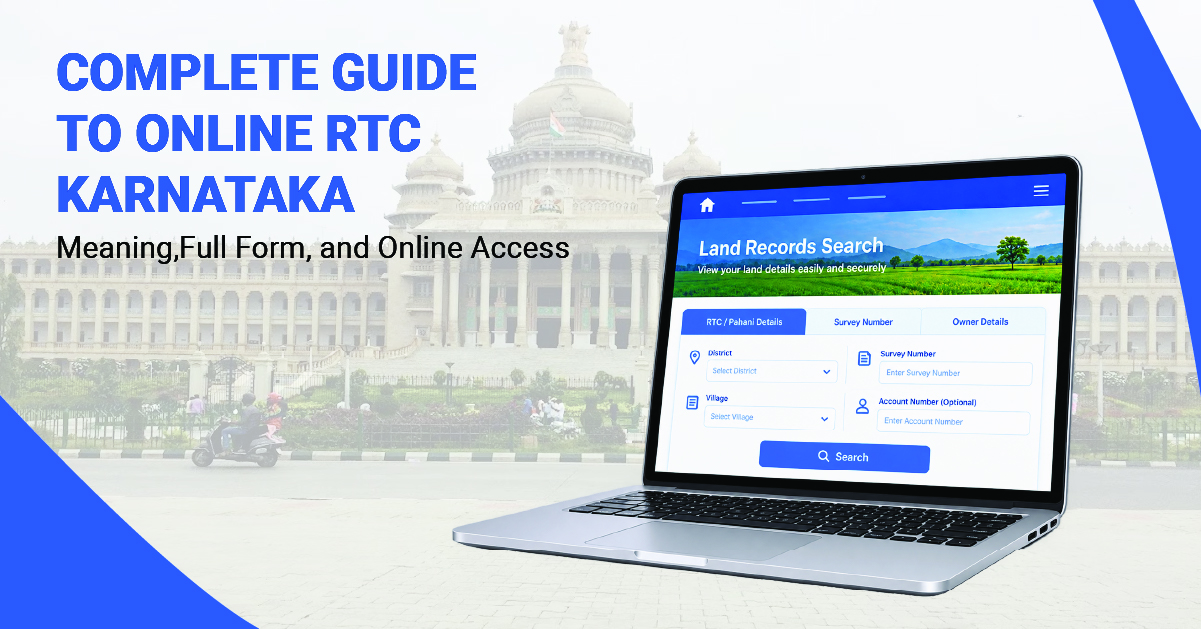
The entire Bhoomi RTC Karnataka database is fully digitised and hosted on the state government’s centralised Bhoomi Portal at landrecords.karnataka.gov.in. You can check and print your land details for free or obtain a digitally signed copy (i-RTC) for formal submissions.
Step-by-step guide to view RTC:
- Visit the Official Bhoomi Website: Go to landrecords.karnataka.gov.in and locate the “View RTC and MR” or “RTC Information” button on the main dashboard.
- Select Location Parameters: Use the sequential drop-down menus to choose your District, Taluk, Hobli, and Village.
- Enter Survey Data: Input the exact Survey Number for the plot, then select the correct Surnoc, Hissa number, and Period/Year from the auto-populated options.
- Fetch and Save: Click “Fetch Details” or “Go”, resolve the captcha, and review the RTC on screen. You can download it as a PDF for your records.
- Optional i-RTC download: For a legally valid, digitally signed document (required for banking or court submissions), select the “i-RTC” service tab and pay the nominal fee (approximately ₹10-₹15 per RTC).
Common Issues in RTC Records and How to Resolve Them
Even with digitised Bhoomi Karnataka land records, buyers often encounter errors or inconsistencies. Here’s what to watch for and how to fix each problem:
| Common Issue | Impact | Resolution |
| Owner Name Mismatch | Makes ownership verification difficult | Submit an application to the Revenue Department along with supporting documents to get the name corrected |
| Incorrect Survey Number | Creates confusion in identifying the exact property | Cross-verify survey details with the village accountant and request official record updates |
| Outdated Ownership Information | Can delay or complicate property transactions | Complete the mutation process and ensure records reflect the current owner’s details |
| Missing Cultivation Information | Leaves land verification incomplete | Approach the concerned revenue authority to verify and update cultivation records |
| Land Extent Discrepancies | Raises concerns about boundaries and actual ownership | Get a fresh land survey conducted and update the RTC with accurate measurements |
Pro Tip: Always cross-check the RTC with the sale deed, mutation register (MR), and other title documents. If you spot discrepancies, work with a local lawyer or revenue officer to get them corrected before proceeding with your transaction.
Protecting Your Investment Through RTC Due Diligence
Property transactions demand careful verification at every stage. The RTC provides a foundation for this due diligence, revealing ownership history, land classification, and potential encumbrances that could affect your investment.
Accessing Bhoomi Karnataka land records online has democratised land verification, putting critical information at your fingertips. Use this accessibility to your advantage by requesting updated RTCs, cross-checking with mutation records, and consulting legal experts when discrepancies arise.
For agricultural land purchases, the RTC is non-negotiable. For residential developments on converted land, it forms part of the broader title verification process. Either way, informed buyers make safer investments.
FAQs
What is RTC in Karnataka?
RTC stands for Record of Rights, Tenancy, and Crops, which is a government revenue record that documents ownership, tenancy, and cultivation details for every surveyed land parcel in Karnataka.
How can I check my RTC online in Karnataka?
Visit the official Bhoomi portal at landrecords.karnataka.gov.in, click “View RTC and MR,” then select your district, taluk, hobli, and village from the drop-down menus. Enter your survey number along with the surnoc and hissa number, resolve the captcha, and the RTC will display on screen.
What is the difference between RTC and Pahani?
There’s no difference; both refer to the same document. RTC is the official term used on the Bhoomi portal and in government records, while Pahani is the colloquial Kannada term commonly used by buyers, brokers, and lawyers in everyday property conversations.
What information does an RTC contain?
An RTC is a snapshot of the land parcel covering five key areas: ownership details, land area and survey numbers, land classification and soil type, cultivation and crop details for Kharif and Rabi seasons, and tenancy and encumbrance information such as loans or legal disputes.
What should I do if there is an error in my RTC record?
Submit an application to the Revenue Department with supporting documents to correct issues like name mismatches or outdated ownership. For extent discrepancies, get a fresh land survey conducted and update the record.