Introduction
The dining area is often described as the heart of a home, a place where families come together to share meals, conversations, and moments of togetherness. In modern city lifestyles, dining spaces are typically designed as part of an open-plan layout that integrates the kitchen and living room. Incorporating Vastu principles into this planning can help enhance harmony, warmth, and positive energy within the home.
Vastu Shastra, a traditional architectural system, focuses on how spatial arrangements and directions influence a home’s energy. When applied to the dining area, these principles offer guidance on the ideal placement of the table, seating arrangement, layout, and materials. Understanding the dining table direction as per Vastu and overall room alignment can make the dining experience more pleasant and balanced.
Table of Contents
- Understanding the Importance of Placement
- Choosing the Right Direction for the Dining Room
- Placement and Orientation of the Dining Table
- Selecting the Right Table Shape and Material
- Lighting, Décor, and Ambience
- Practical Layout Considerations
- Common Mistakes to Avoid
- Enhance Positivity and Harmony Within the Home
Understanding the Importance of Placement
The dining area is believed to represent nourishment and emotional bonding. Vastu suggests that the dining space should facilitate relaxed interaction and comfortable eating. When considering the position of the dining table as per Vastu, the idea is to create a setting that encourages calmness, good conversation, and a sense of equality among everyone seated.
In many contemporary flats in Bangalore, the dining area is adjacent to the kitchen for convenience. This location generally aligns well with Vastu recommendations, as it supports efficient meal service and keeps the dining experience connected to the core of daily activities.
Choosing the Right Direction for the Dining Room
Vastu suggests locating the dining area in the West, South, or East zones of the home. These directions are often recommended when determining the dining room direction as per Vastu. They are associated with warmth, nourishment, and positive social interaction. When sunlight and ventilation align with meal times, the atmosphere automatically feels more welcoming.
- A dining space in the East encourages fresh, uplifting morning meals.
- West or South-facing dining area works well for evening meals when families unwind together.
Homebuyers looking at flats in Bangalore will often notice that residential plans offer ample natural lighting through balconies or large windows. This makes it easier to create a naturally lit dining corner.
Placement and Orientation of the Dining Table
The dining table position as per Vastu, emphasises maintaining open space around the table for movement and ease. A key guideline suggests that while eating, individuals should ideally face East or North, as these directions are believed to support positive energies and clarity of thought.
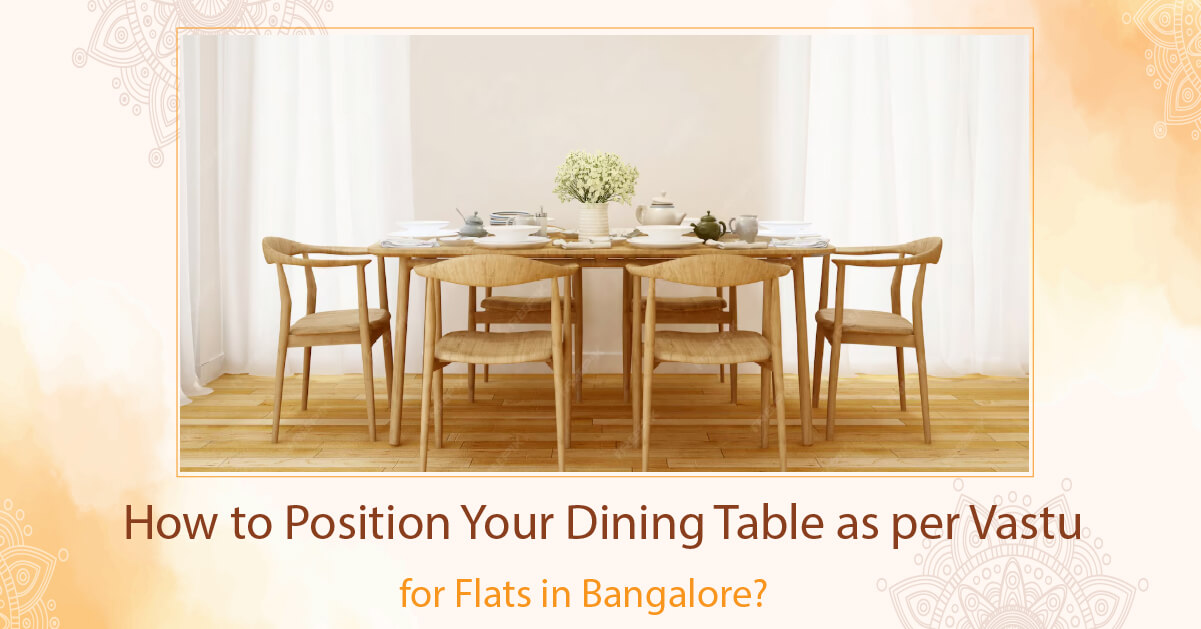
When arranging furniture, the direction of the dining table, as per Vastu, is to place the table centrally in the dining space rather than pushing it against a wall. This allows smooth circulation and ensures everyone seated feels equally included. A clutter-free surrounding further contributes to a pleasant dining environment.
Selecting the Right Table Shape and Material
Vastu encourages choosing dining tables that represent balance. Square or rectangular tables are generally considered harmonious, providing symmetrical seating and supporting equal interaction. Round tables may also be suitable, as they encourage inclusiveness and smooth conversation flow.
When it comes to materials, wood is widely preferred for its natural warmth and grounding effect. However, many modern homes feature contemporary furniture, including glass-topped tables. Vastu for the glass-top dining table suggests ensuring the glass is clear, unbroken, and well-supported, as transparency can symbolise clarity and openness. In larger dining areas found in modern flats in Bangalore, glass tables can add visual lightness and enhance the sense of space.
Lighting, Décor, and Ambience
Lighting holds an important place in Vastu, as it influences mood and energy. Natural light during the day and soft, warm lighting in the evening help the dining area feel relaxed and welcoming. Avoid placing heavy chandeliers directly above specific seats, as they can create a sense of weight or discomfort.
Wall décor should be simple and pleasant. Artwork that depicts nature, togetherness, or abundance is considered supportive of positive dining experiences. Avoid placing mirrors facing the dining table unless they reflect the dining spread in a balanced way; when used thoughtfully, they can symbolise prosperity.
Practical Layout Considerations
The dining space should allow comfortable seating and free movement. Avoid placing the dining table too close to doorways, as it may hinder natural circulation. If the dining area shares space with the living room, consider subtle zoning through rugs, lighting variations, or furniture arrangement.
Keep the dining area clean and clutter-free. Items unrelated to mealtime should not accumulate on the table, as they may disrupt energy balance. Small plants or soft table décor can be included, but moderation is key.
Common Mistakes to Avoid
To maintain harmony in the dining area, Vastu suggests avoiding certain placements:
- The dining table should not be placed directly opposite a bathroom entrance.
- Avoid seating where someone’s back directly faces the main entrance, as it may create discomfort.
- Sharp or uneven table edges should be avoided whenever possible.
- Try not to place electronic appliances too close to the dining area, as mealtime is best kept distraction-free.
These simple considerations can significantly influence the dining environment.
Enhance Positivity and Harmony Within the Home
Positioning the dining table thoughtfully plays an important role in shaping how families connect over daily meals. When the dining area aligns with Vastu principles, it creates a balanced, harmonious environment where conversations feel natural and comforting. In many well-planned flats in Bangalore, layouts are thoughtfully designed to include dining spaces that are practical, comfortable, and easy to move around in, fostering a natural sense of ease.
Casagrand designs its communities to be Vastu-compliant, ensuring that families find it simpler to create warm and inviting dining corners. By paying attention to the said particularities, homeowners can cultivate a setting that supports togetherness, peace, and meaningful moments shared every day.