Introduction
Land decisions are rarely as simple as choosing a location or price point. A property’s true potential is often shaped by zoning classifications, which determine what can be built, how land can be used, and how its value may evolve over time. These regulations are critical when navigating different land-use zones across India.
Understanding zoning is important in major cities such as Chennai, Hyderabad, Bangalore, Pune, and the Delhi-NCR region, as well as rural areas, as it determines how land can be used and how its value may evolve over time.
Without a clear understanding of these rules, even a good investment can face unexpected challenges. Let’s look at how these classifications function and what they mean for buyers.
Table of Contents
- Understanding Land Zoning in India
- Different Types of Land Zones in India
- Special Land Classifications Within Zoning Categories
- Why Understanding Types of Land Zones Matters?
- How to Verify Land Zoning Before Buying?
- Making Smarter Land Decisions Starts with Zoning Awareness
Understanding Land Zoning in India
Land zoning is the official classification of land into categories that define how it can be used, built upon, and managed. Each zone has specific regulations governing construction, usage, and environmental impact.
Zoning helps authorities manage urban expansion, control population density, ensure safety, and preserve natural resources. For buyers, understanding zoning ensures legal compliance, prevents future disputes, and clarifies development potential. These classifications help manage urban growth, infrastructure planning, and environmental balance.
The different types of zones influence:
- Construction permissions
- Land usage flexibility
- Infrastructure development
- Investment potential
Knowing the different land zones early helps buyers avoid restrictions that could limit development or resale potential. This becomes even more important in rapidly growing urban markets, where planning frameworks continue to evolve.
For instance, when evaluating land in Chennai, Bangalore, or other cities, zoning regulations may change as those cities grow and redevelop. Understanding both current rules and possible updates can help buyers make more informed and secure investment decisions.
Different Types of Land Zones in India
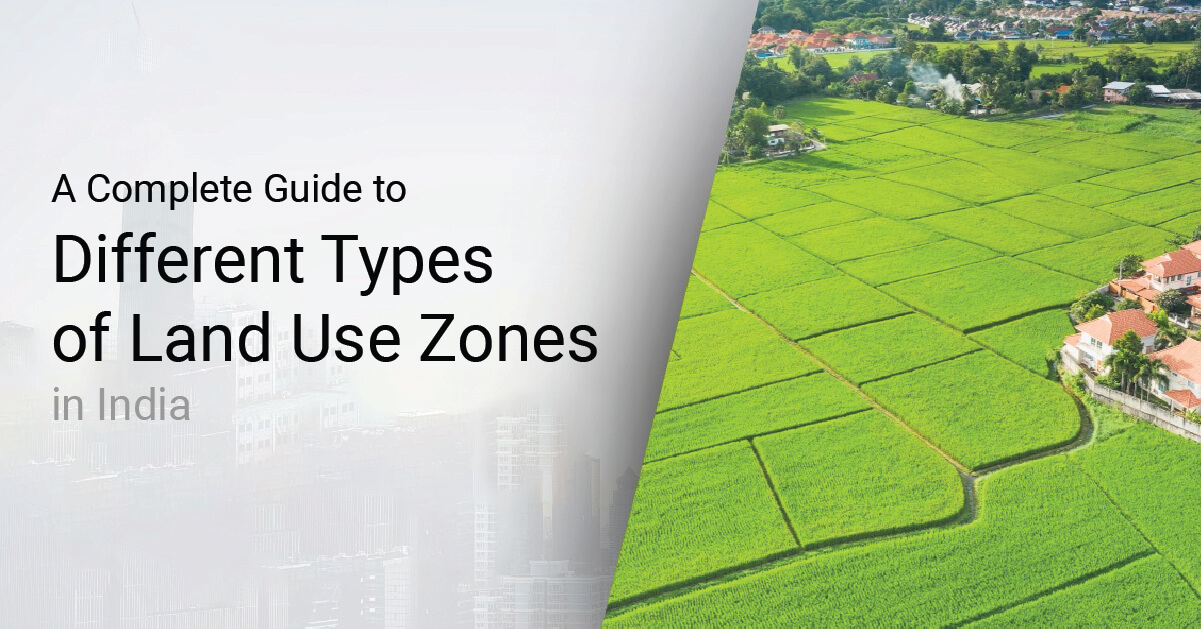
Across India, zoning is structured to support organised development while balancing economic and environmental priorities. While classifications may vary slightly, the core types of land zone categories remain consistent.
1. Residential Zones
These areas are designated for housing developments, including plots, villas, and apartments. Construction is permitted under municipal regulations, often subject to limits on building height, density, and floor area ratio.
Residential zones provide clear development paths and access to essential civic infrastructure, making them suitable for personal or long-term investment purposes.
2. Commercial Zones
Commercial zones are intended for offices, retail shops, restaurants, hotels, and other business establishments. These areas are designed to support economic activity, with improved infrastructure such as wider roads, parking facilities, and better connectivity to transport hubs.
Residential construction is typically restricted, but these zones present opportunities for business-oriented development and higher land value appreciation.
3. Industrial Zones
Industrial zones are reserved for manufacturing units, warehouses, logistics hubs, and large-scale production facilities. These areas are generally located away from residential neighbourhoods to minimise environmental and noise impact. Strict safety, environmental, and operational regulations govern construction and operations in industrial zones.
While they are crucial for economic activity and job creation, industrial zones are unsuitable for housing or retail investments. Land here is typically valued based on logistics potential, connectivity, and industrial development plans.
4. Agricultural Zones
Agricultural zones are primarily for farming, cultivation, and horticulture, with limited permissions for construction. Any conversion to residential, commercial, or industrial use requires formal approval from local authorities, often involving rezoning applications and compliance checks.
These areas are critical for food production and rural employment, but investors must understand restrictions, water access, and soil quality before considering non-agricultural development. Clear knowledge of agricultural zoning helps prevent legal disputes and ensures that any investment aligns with both current regulations and future development plans.
Understanding these land zone types helps buyers make informed decisions, ensuring compliance, usability, and long-term growth potential.
Special Land Classifications Within Zoning Categories
Beyond standard zoning, certain classifications impose restrictions or permit conditional use. These are often identified through colour-coded systems and highlight risk levels, environmental sensitivity, or regulatory controls.
Understanding these classifications helps buyers interpret not just usage, but also limitations tied to specific locations.
1. Red Zone Area
Red zone land means areas where development is restricted due to safety or environmental concerns. Red zone areas may include:
- Flood-prone regions
- Coastal regulation zones
- Environmentally sensitive zones
- High-risk areas near industrial sites
Key Considerations:
- Higher regulatory scrutiny
- Limited or no construction permissions
- Reduced resale flexibility
Understanding what the red zone area is helps buyers avoid land that may not support development. In many cases, red-zone land directly signals long-term restrictions that cannot be easily altered.
2. Green Zone Land
Green zones are designated to preserve ecological balance and open spaces. These areas may include:
- Parks and forests
- Agricultural belts
- Protected environmental regions
Key Considerations:
- Minimal construction allowed
- Focus on sustainability
- Long-term environmental value
Green zone land means areas that prioritise conservation over development. While these zones may not support immediate construction, understanding what green zone land means can help buyers evaluate long-term environmental and regulatory implications.
3. Yellow Zone Land
Yellow zones are often considered transitional or flexible-use areas within zoning frameworks. These zones may include:
- Semi-urban regions
- Developing localities
- Areas with conditional permissions
Key Considerations:
- Moderate development flexibility
- Potential for future conversion
- Dependent on authority approvals
Yellow zone land is often associated with emerging opportunities and transitional development areas. For buyers exploring land, understanding what yellow land means can help identify locations with strong growth potential and future value appreciation.
Why Understanding Types of Land Zones Matters?
Zoning is not just a regulatory requirement; it directly impacts usability and returns. Some of the key reasons to evaluate zoning carefully are:
- Legal Clarity: Ensures compliance with regulations
- Investment Security: Reduces the risk of unusable land
- Future Potential: Aligns with long-term goals
- Resale Value: Influences demand and pricing
In addition to existing classifications, it is equally important to understand the land re-zoning process. In India, land can be reclassified from one zone to another, such as agricultural to residential or commercial, subject to approval from local development authorities. This process typically involves submitting an application, obtaining clearances, and complying with regional master plans and environmental norms.
Awareness of both current zoning and the possibility of re-zoning helps buyers make more structured, future-ready, and confident decisions.
How to Verify Land Zoning Before Buying?
Before purchasing, it is essential to verify the zoning classification. A few steps to check zoning details include:
- Review local authority master plans
- Check land classification records
- Verify approvals with municipal bodies
- Consult legal experts
- Assess infrastructure and development plans
Making Smarter Land Decisions Starts with Zoning Awareness
Zoning plays a quiet but defining role in how land performs over time. It influences development possibilities, regulatory clarity, and long-term value in ways that are not always visible at first glance.
A well-informed approach focuses on understanding these classifications before making a commitment. This reduces uncertainty and creates a stronger foundation for decision-making. If you are considering land in Chennai, Hyderabad, or other cities, it is important to assess zoning. It can help you identify opportunities that align with your goals and ensure your plans match future growth expectations.